What Is the MOQ for Custom Clothing? | STX Garment

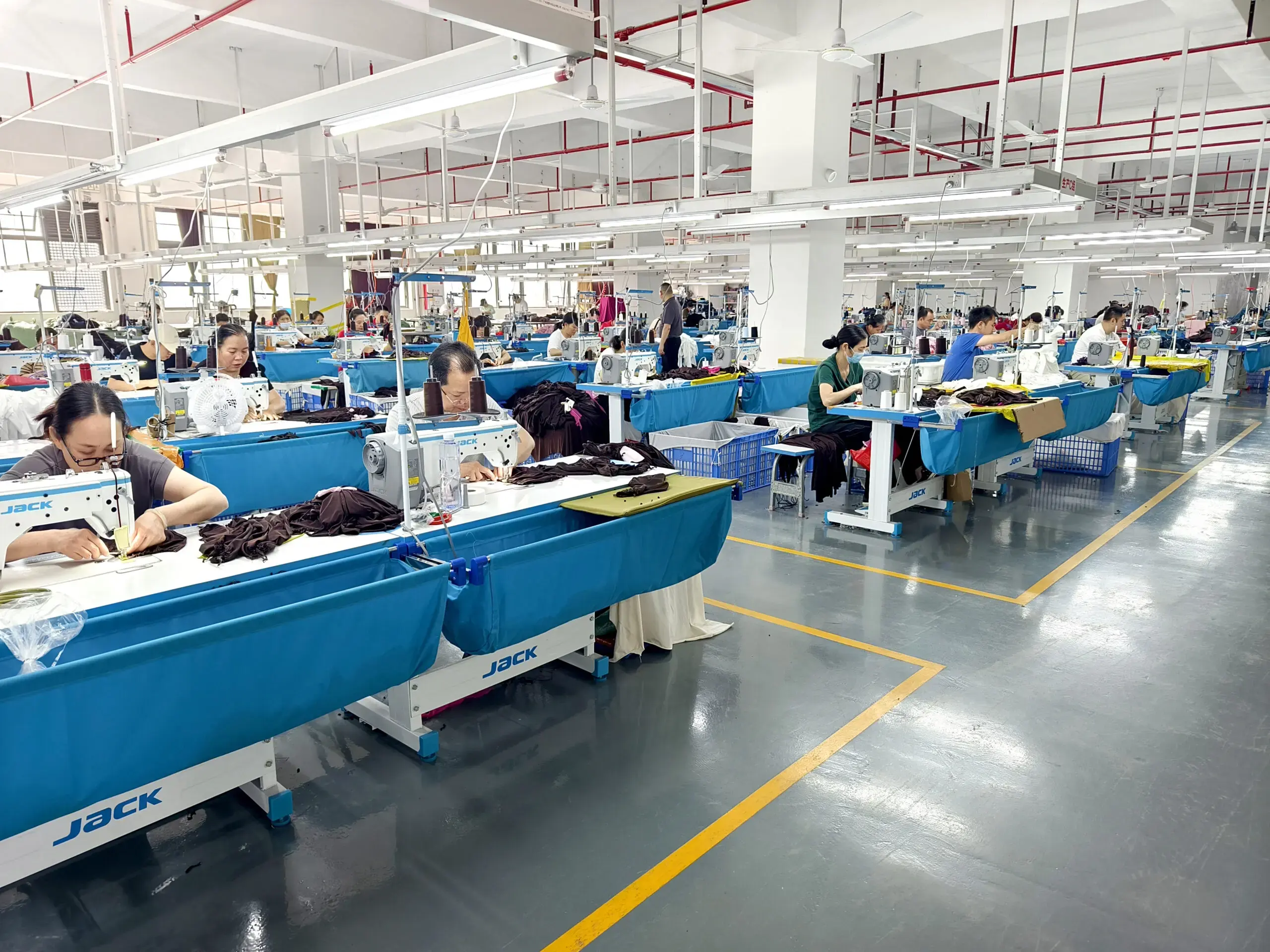
CUSTOM CLOTHING MANUFACTURING
Plan MOQ by style, color and approved specification.
What Is the MOQ for Custom Clothing? For brands planning custom apparel production,
MOQ means the minimum order quantity a manufacturer requires for a specific project.
However, the actual quantity can vary according to the garment, fabric, customization,
colors, construction, accessories, and production requirements.
MOQ stands for Minimum Order Quantity. In apparel manufacturing,
it refers to the minimum number of garments a factory will normally accept for a
specific bulk production order.
However, there is no single MOQ that applies to every custom clothing project.
The required quantity can change according to the garment type, fabric, GSM,
colors, construction, customization, accessories, packaging, and production process.
For selected custom apparel projects, STX Garment can support production starting
from 100 pieces per style and color. The actual MOQ still depends on the product
specifications and manufacturing requirements.
There is no universal MOQ for custom clothing. Instead, manufacturers determine
MOQ according to the product, fabric, customization, colors, construction,
accessories, and production requirements. For selected projects, STX Garment
can support production starting from 100 pieces per style and color.
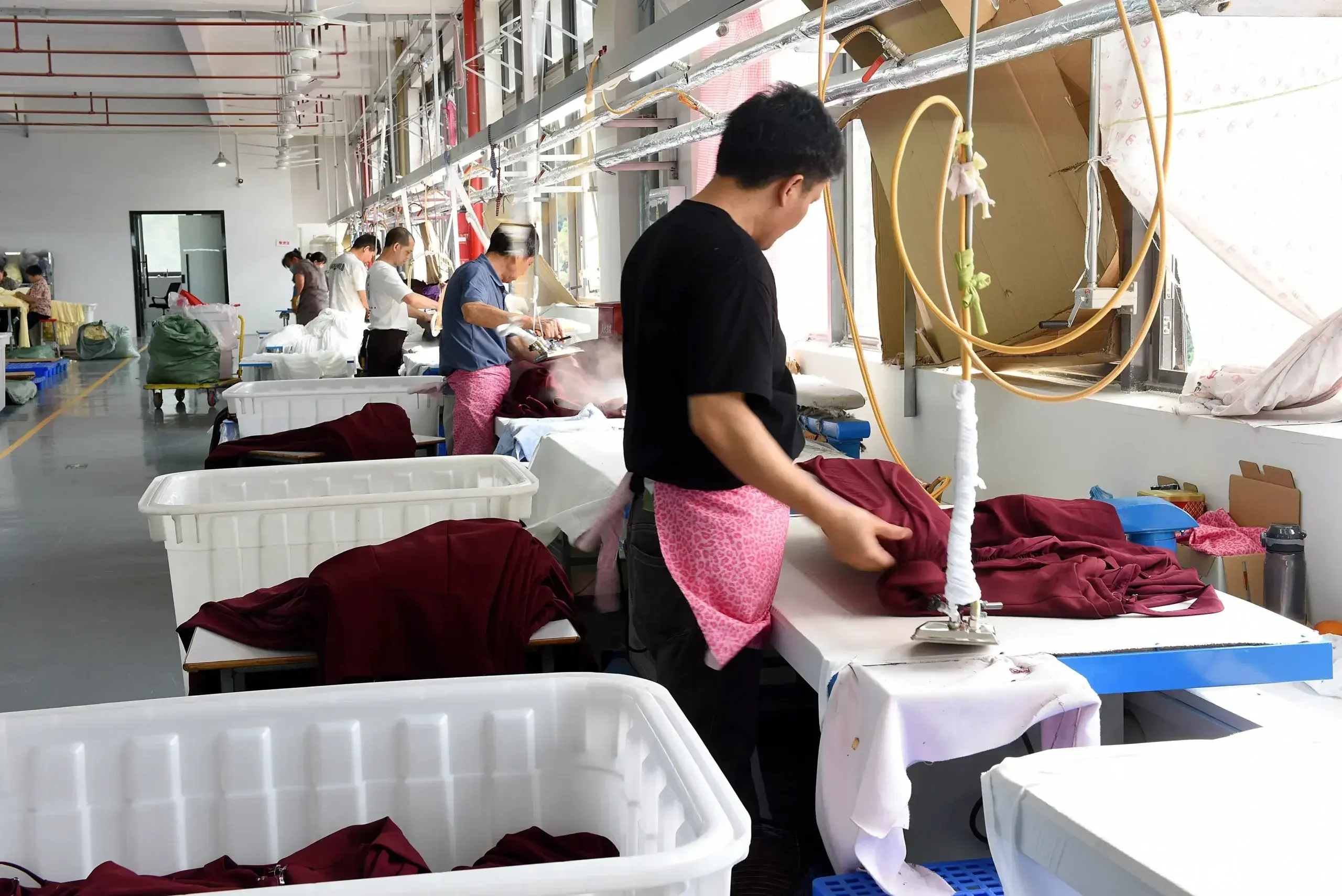
pattern development, production, and quality control.
What Does MOQ Mean in Clothing Manufacturing?
MOQ means Minimum Order Quantity. For a clothing manufacturer,
it represents the minimum production quantity needed to make a project practical
from a material, labor, setup, and production perspective.
For example, if a manufacturer confirms an MOQ of 100 pieces for a particular
custom hoodie project, the production order would generally need to reach that
quantity. Nevertheless, another hoodie with different fabric, colors, construction,
or customization may have different requirements.
Therefore, MOQ should be treated as a project-specific manufacturing condition
rather than a universal number.
A manufacturer may establish different MOQ requirements for:
- Custom T-shirts
- Heavyweight hoodies
- Sweatshirts
- Streetwear
- Jackets and outerwear
- Cut-and-sew garments
- Custom-developed fabrics
- Special washing processes
- Highly customized OEM and ODM products
As a result, the most accurate MOQ can only be confirmed after the manufacturer
reviews the actual product specifications.
For a general explanation of Minimum Order Quantity in manufacturing,
you can also review
Shopify’s guide to Minimum Order Quantity (MOQ)
.
What Is a Typical MOQ for Custom Clothing?
There is no universal industry-wide MOQ for custom clothing. Some relatively
simple apparel projects may be possible at lower quantities, while more complex
garments can require larger production runs.
For selected projects, STX Garment can work with quantities starting from 100 pieces per style and color. However, this starting quantity depends on the garment,
fabric, customization, and overall manufacturing requirements.
| Custom Clothing Project | MOQ Consideration |
|---|---|
| Basic custom T-shirt | Product and customization dependent |
| Custom sweatshirt | Product and fabric dependent |
| Custom hoodie | Product and customization dependent |
| Heavyweight hoodie | Product and fabric dependent |
| Custom streetwear | Product and construction dependent |
| Cut-and-sew apparel | Construction dependent |
| Custom fabric development | Fabric supplier dependent |
| Complex OEM/ODM project | Specification dependent |
These are production considerations rather than fixed universal MOQs.
The final MOQ should be confirmed after reviewing the garment, fabric,
colors, size breakdown, decoration, accessories, and packaging requirements.
Why Do Clothing Manufacturers Have an MOQ?
MOQ exists because apparel production involves materials, labor, machinery,
preparation, quality control, and production management. A small order is not
always simply a smaller version of a large production run.
In practice, several production costs and preparation steps need to be organized
before the first garment is completed.
1. Fabric Purchasing
Fabric is one of the major factors affecting apparel MOQ. A manufacturer may
need to source fabric according to composition, GSM, color, width, weight,
finishing, and washing requirements.
For example, a streetwear brand developing a heavyweight hoodie may specify
fabric in the 300–500+ GSM range. If the material needs to be
specially developed, dyed, knitted, or finished, the fabric supplier may also
have its own purchasing requirements.
Learn more about
STX Garment’s fabric capabilities
.
2. Pattern Development
Custom clothing normally requires pattern development before bulk production.
Depending on the garment, the development process may involve:
- Body pattern development
- Sleeve pattern development
- Hood pattern development
- Pocket construction
- Collar construction
- Rib dimensions
- Seam allowance
- Fit adjustment
Learn more about
STX Garment’s designing ability
and
design support
.
3. Cutting and Production Setup
Garment manufacturing requires preparation for cutting, sewing, finishing,
inspection, and packing. Therefore, production teams may need to organize:
- Fabric spreading
- Cutting
- Bundling
- Sewing operations
- Machine setup
- Quality inspection
- Finishing
- Packing
4. Custom Labels and Accessories
A custom clothing order may also include woven labels, printed labels,
hang tags, care labels, custom buttons, zippers, drawcords, packaging,
and custom polybags.
In addition, these components may have their own minimum purchasing quantities.
For this reason, accessories can influence the overall production plan.
Explore
custom garment accessories
and
custom labels and packaging
.
Does a Higher MOQ Mean a Lower Price?
Not automatically. A larger order can often reduce the average cost per piece
because certain setup and production costs can be distributed across more garments.
However, the unit price of custom clothing depends on many variables, including:
- Fabric
- GSM
- Garment weight
- Construction
- Sewing complexity
- Printing
- Embroidery
- Washing
- Accessories
- Packaging
- Quality requirements
- Order quantity
For example, a 100-piece heavyweight hoodie with embroidery and custom packaging
can have very different production economics from a 100-piece basic T-shirt.
Therefore, brands should compare the complete specification rather than quantity alone.
Can You Order 100 Pieces of Custom Clothing?
For selected products, 100 pieces can be a practical starting quantity.
However, whether 100 pieces is suitable depends on the complete product specification.
Consider a custom heavyweight hoodie with:
- 450 GSM target fabric
- Oversized fit
- Custom pattern
- Embroidery
- Woven neck label
- Custom hang tag
- Custom packaging
This project is very different from producing 100 basic T-shirts using
existing fabric and simple decoration.
Therefore, instead of asking only whether a factory can produce 100 pieces,
brands should ask whether the manufacturer can produce their specific
product at that quantity while meeting the required fabric,
construction, customization, and quality standards.
“Can you manufacture my specific product at 100 pieces with the required
fabric, construction, customization, and quality?”
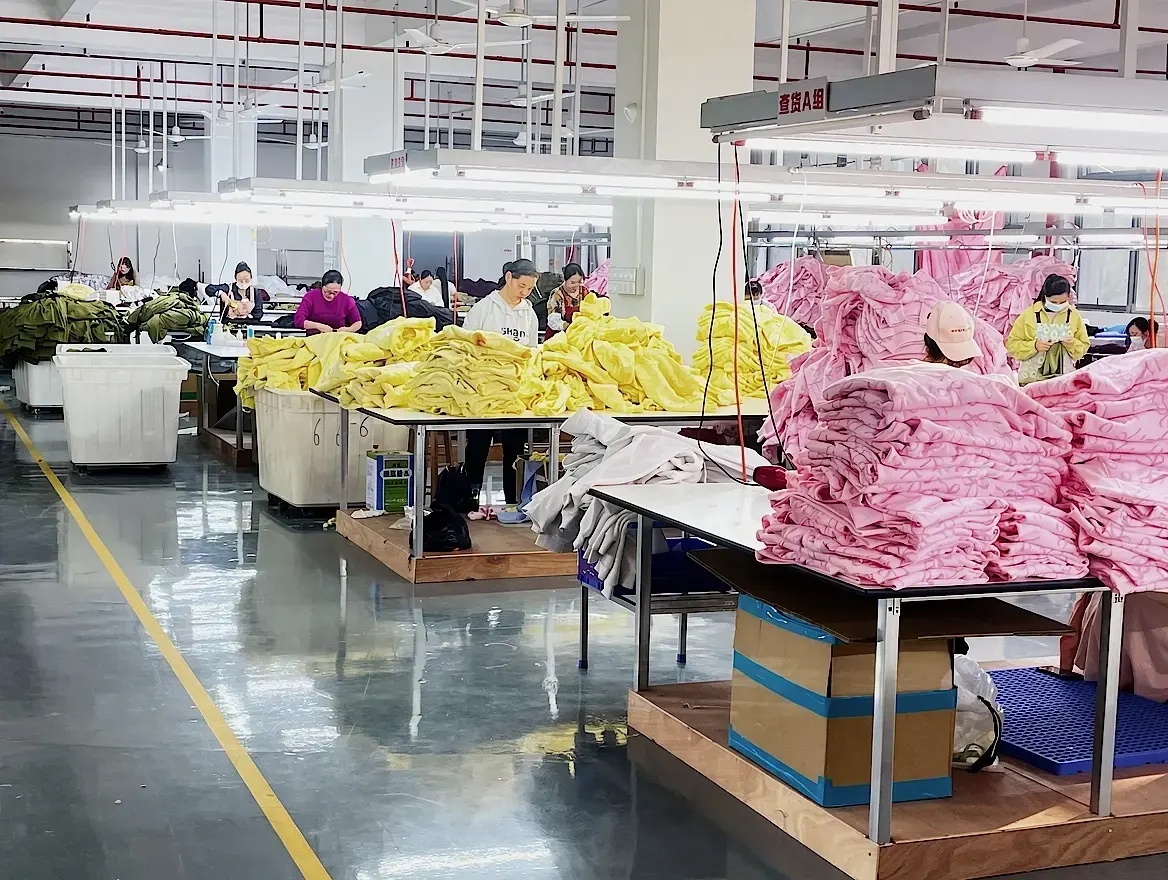
depending on GSM, construction, decoration, and accessories.
What Is the MOQ for Custom Hoodies?
Custom hoodies are among the most common products requested by streetwear brands.
Nevertheless, hoodie MOQ can vary significantly according to the specifications.
A custom hoodie may include:
- Heavyweight fabric
- Oversized fit
- Drop shoulders
- Custom hood construction
- Custom ribbing
- Screen printing
- Embroidery
- Appliqué
- Custom labels
- Custom drawcords
- Garment washing
- Custom packaging
STX Garment works with heavyweight apparel projects using fabrics in the
300–500+ GSM range, depending on product requirements.
If your project involves a heavyweight hoodie, provide the target GSM,
fabric composition, measurements, reference images, and construction details.
This information allows the manufacturer to evaluate the project more accurately.
Explore our
Custom Hoodie Solution
for more information.
How Does Customization Affect MOQ?
Customization can influence MOQ because additional requirements may introduce
new materials, preparation steps, production processes, or supplier conditions.
Basic Customization
A relatively simple project may use existing fabric and standard construction
while adding a custom logo, printing, embroidery, and labels.
Full Custom OEM/ODM Manufacturing
By contrast, a more advanced project may involve:
- Custom pattern
- Custom fit
- Custom fabric
- Custom color
- Custom washing
- Custom labels
- Custom accessories
- Custom packaging
STX Garment provides
OEM and ODM cut-and-sew manufacturing
for brands that require custom apparel development.
MOQ should be evaluated according to the complete product specification,
rather than based on garment type alone.
Does Fabric MOQ Affect Clothing MOQ?
Yes, it can. This is particularly important when a brand requests a special fabric.
A manufacturer may need to purchase a minimum quantity before garment production begins.
Fabric MOQ can be affected by:
- Fabric composition
- GSM
- Color
- Dyeing
- Finishing
- Custom knitting
- Special treatment
- Fabric width
As a result, a low garment quantity does not always mean that the fabric supplier
can provide the exact material in the same quantity.
Does Color Affect Clothing MOQ?
It can. Producing 100 pieces in one color can be operationally different from
producing 100 pieces divided across several custom colors.
Depending on the material and process, each color may require separate fabric
preparation, dyeing, cutting, or production planning.
Therefore, when requesting a quotation, provide:
- Total quantity
- Number of colors
- Quantity per color
- Size breakdown
- Fabric requirements
Can Different Sizes Be Mixed in One Order?
Apparel production orders normally contain multiple sizes rather than a single size.
For example, a brand may order XS, S, M, L, XL, and XXL within one production run.
However, the exact size ratio should be determined according to the target market,
expected demand, and manufacturer’s production requirements.
Before production begins, confirm the size breakdown and quantity allocation
with the manufacturer.
How Can New Clothing Brands Reduce MOQ Risk?
MOQ is particularly important when launching a new clothing brand. A new brand
may not yet know which product, color, or size will generate the strongest demand.
For this reason, a structured product development process can help brands
evaluate the product before committing to bulk production.
Define the Product
Start with a clear product concept including garment type, fit,
fabric, GSM, color, construction, decoration, and packaging.
Prepare a Tech Pack
A tech pack can include technical drawings, measurements,
fabric composition, GSM, color references, construction details,
stitching, labels, and packaging.
Develop a Sample
Evaluate fit, measurements, fabric, GSM, construction, stitching,
printing, embroidery, washing, and labels before bulk production.
Learn more about
STX Garment Sample Support
.
Approve the Final Specification
Confirm fabric, color, size ratio, quantity, labels, accessories,
packaging, and quality requirements.
Start Bulk Production
Once the sample and specifications are approved, the manufacturer
can proceed with the bulk production plan.
and customization before committing to bulk production.
MOQ vs. Sample Quantity
MOQ and sample quantity are not the same thing. A sample
is created to evaluate a product before bulk production, while MOQ applies
to the bulk production order.
In practice, a custom apparel development process can follow this sequence:
This process is especially useful for custom garments because fit, fabric,
construction, decoration, and finishing details may need physical evaluation
before the production quantity is confirmed.
What Should You Ask a Custom Clothing Manufacturer About MOQ?
1. What is the MOQ per style?
First, find out whether MOQ is calculated per design, style, or entire order.
2. Is MOQ calculated per color?
This matters if your collection includes several colors or custom-dyed fabrics.
3. Can I mix sizes?
Confirm the manufacturer’s requirements for your size breakdown.
4. Can I mix colors?
Ask whether multiple colors can be included within the same production order.
5. Does the fabric have a separate MOQ?
Custom fabric may have its own minimum purchasing quantity.
6. Do labels and accessories have separate MOQs?
Ask about woven labels, hang tags, packaging, buttons, zippers,
drawcords, and other components.
7. What is the sample process?
Confirm how samples are developed, revised, approved, and prepared for bulk production.
8. What is the production lead time?
MOQ and production timing should be considered together when planning inventory.
9. Can the order scale later?
If the product performs well, ask whether future production quantities can be increased.
How STX Garment Supports Custom Clothing Production
STX Garment is a China-based B2B apparel manufacturer specializing in custom
clothing production for brands and businesses.
Its manufacturing focus includes:
- Custom streetwear
- Heavyweight hoodies
- Sweatshirts
- T-shirts
- Outerwear
- Cut-and-sew apparel
- OEM manufacturing
- ODM development
- Private-label apparel
For selected custom projects, production can start from 100 pieces per style and color, depending on the product and manufacturing specifications.
The development and production process can include:
Design → Pattern Development → Fabric → Sampling → Crafting →
Accessories → Bulk Production → Quality Control → Packaging
Learn more about
STX Garment’s crafting capabilities
and
the factory
.
For private-label development, explore
Custom Labels & Packaging
.
Is Low MOQ Always Better?
A low MOQ can be useful for a new brand that wants to limit initial inventory.
However, MOQ should be evaluated together with the complete manufacturing requirements.
A very low quantity may not always provide the most practical production economics,
especially when the product requires custom fabric, complex construction,
special washing, multiple colors, custom accessories, or custom packaging.
For this reason, brands should consider the complete production equation:
Sampling + Lead Time + Scalability
MOQ Is Only One Part of Choosing a Clothing Manufacturer
MOQ is an important consideration, but it is only one part of the manufacturing process.
A suitable production plan also needs to account for development, materials,
quality requirements, production management, and future scalability. A production partner may need to understand:
- Product development
- Fabric selection
- Pattern making
- Sampling
- Garment construction
- Quality control
- Accessories
- Packaging
- Bulk production
- Supply chain coordination
Learn more about
STX Garment Supply Chain Management
and
Client-Centric Solutions
.
Confirm MOQ for Your Actual Product
STX Garment is a custom apparel manufacturer in Humen, Dongguan, China. The standard starting MOQ is 100 pieces per style and color, subject to fabric, decoration and component requirements. For example, two colors at this starting MOQ mean 100 pieces in each color, or 200 pieces total. Confirm the size split and any separate material minimums in the quotation.
- Choose the manufacturing service: Review OEM/ODM cut-and-sew manufacturing or custom hoodie manufacturing.
- Review product examples: Compare the puff print and flocking sweatshirt reference or washed fringe zip hoodie reference. These show design directions; confirm your own specification and sample.
- Request a project quote: Send quantities by style, color and size, fabric requirements, artwork, trim and packaging details through Request a Quote.
For related buyer questions, read the T-shirt MOQ guide, sweatshirt cost guide and clothing manufacturing lead-time guide. Explore all manufacturing references and confirm MOQ and bulk pricing.
Frequently Asked Questions About Custom Clothing MOQ
What does MOQ mean in clothing?
MOQ means Minimum Order Quantity. It is the minimum
number of garments a manufacturer requires for a particular bulk
production project.
What is a typical MOQ for custom clothing?
There is no universal MOQ for every clothing product. The quantity
depends on the manufacturer, garment type, fabric, customization,
colors, accessories, and production requirements.
Can I manufacture custom clothing with 100 pieces?
For selected custom apparel projects, production can start from
100 pieces per style and color. The final MOQ depends on the product specifications
and manufacturing requirements.
What is the MOQ for custom hoodies?
Custom hoodie MOQ varies depending on fabric, GSM, construction,
colors, decoration, labels, accessories, and packaging. The manufacturer
should confirm the MOQ after reviewing the specific hoodie requirements.
Does custom fabric increase MOQ?
It can. Custom-developed, dyed, knitted, or specially finished fabrics
may have their own minimum purchasing requirements.
Does color affect clothing MOQ?
It can. Multiple colors may require separate fabric preparation or
production planning depending on the material and process.
Can I mix sizes in a custom clothing order?
Many apparel production orders contain multiple sizes. The exact size
ratio should be confirmed with the manufacturer before production.
Should I make a sample before placing a bulk order?
A sample allows the brand to evaluate fit, measurements, fabric,
construction, decoration, and other specifications before committing
to bulk production.
Is a lower MOQ always better?
A lower MOQ can reduce initial inventory, but production costs,
customization requirements, product quality, lead time, and scalability
should also be considered.
Ready to Start Your Custom Clothing Project?
Send STX Garment your product idea, tech pack, reference images,
fabric requirements, target GSM, quantity, size range, colors,
and customization requirements.
Our team can evaluate the manufacturing requirements, MOQ,
sampling process, and bulk production options for your project.