
Custom Apparel Printing, Embroidery & Finishing
Custom apparel printing and embroidery bring a garment design to life. STX Garment helps streetwear and fashion brands select the right printing, embroidery, washing, patch, appliqué and finishing methods for OEM/ODM production.
PRINT TECHNIQUES
EMBROIDERY & PATCHES
WASH & DYE EFFECTS
SAMPLE APPROVAL
Custom Apparel Printing and Embroidery: Choosing a Technique
STX Garment reviews printing, embroidery, washing and embellishment methods for custom apparel manufacturing in Dongguan, China. Artwork, fabric composition, placement, finish, order quantity and target cost guide the process choice; approve the technique on your project material before bulk production.
Custom Apparel Printing and Embroidery for Streetwear
We recommend decoration techniques based on your garment category, artwork, fabric, target price and quality requirements.
Match Apparel Printing and Embroidery to Fabric
Use this guide to prepare a development discussion. Final suitability depends on the actual fabric, artwork and process settings; a technique name alone does not confirm production performance.
| Technique | Product application | Review on the sample |
|---|---|---|
| Screen print, DTG and heat transfer | Graphic T-shirts and sweatshirts | Composition, surface, artwork detail, color, hand feel and wash behavior |
| Puff, silicone and embossed effects | Raised logos and textured hoodie graphics | Fabric weight, effect height, edge definition, flexibility and process sequence |
| Embroidery, appliqué and patches | Brand marks on hoodies, jackets and sets | Stitch density, backing, placement, puckering and wearer comfort |
| Wash and dye effects | Vintage tees, hoodies and matching sets | Shade, shrinkage, appearance variation and compatibility with decoration and trims |
| Rhinestones, reflective and foil effects | Statement graphics and surface details | Attachment, heat compatibility, surface appearance and agreed care conditions |
| Beading, sequins and mixed media | Detailed capsule styles | Placement, attachment, comfort, labor requirements and repeatability |
Start with fabric development and sourcing, then coordinate trims and hardware. Sublimation and heat-based effects require a suitable material; approve any new combination through sampling.
Apparel Printing and Embroidery: Sample to Bulk
- Technical review: Supply artwork, dimensions, garment mockups, color references, fabric specifications and quantity per style and color.
- Technique trial: Review a print strike-off, embroidery swatch, wash trial or other relevant process sample on the intended material.
- Garment sample: Check the effect at the final placement, including seams, pockets, ribbing and interactions between techniques.
- Approval record: Confirm appearance, measurements, color references, acceptable variation, care requirements and any applicable testing criteria in writing.
- Bulk reference: Use the approved sample and specifications for production checks; reconfirm changes to fabric, artwork, finish or process.
Review garment sample development, product development and OEM/ODM cut-and-sew manufacturing together. Setup, artwork complexity, coverage, stitches, handwork and quantity can affect decoration cost and production timing.
Custom Apparel Printing and Embroidery Examples
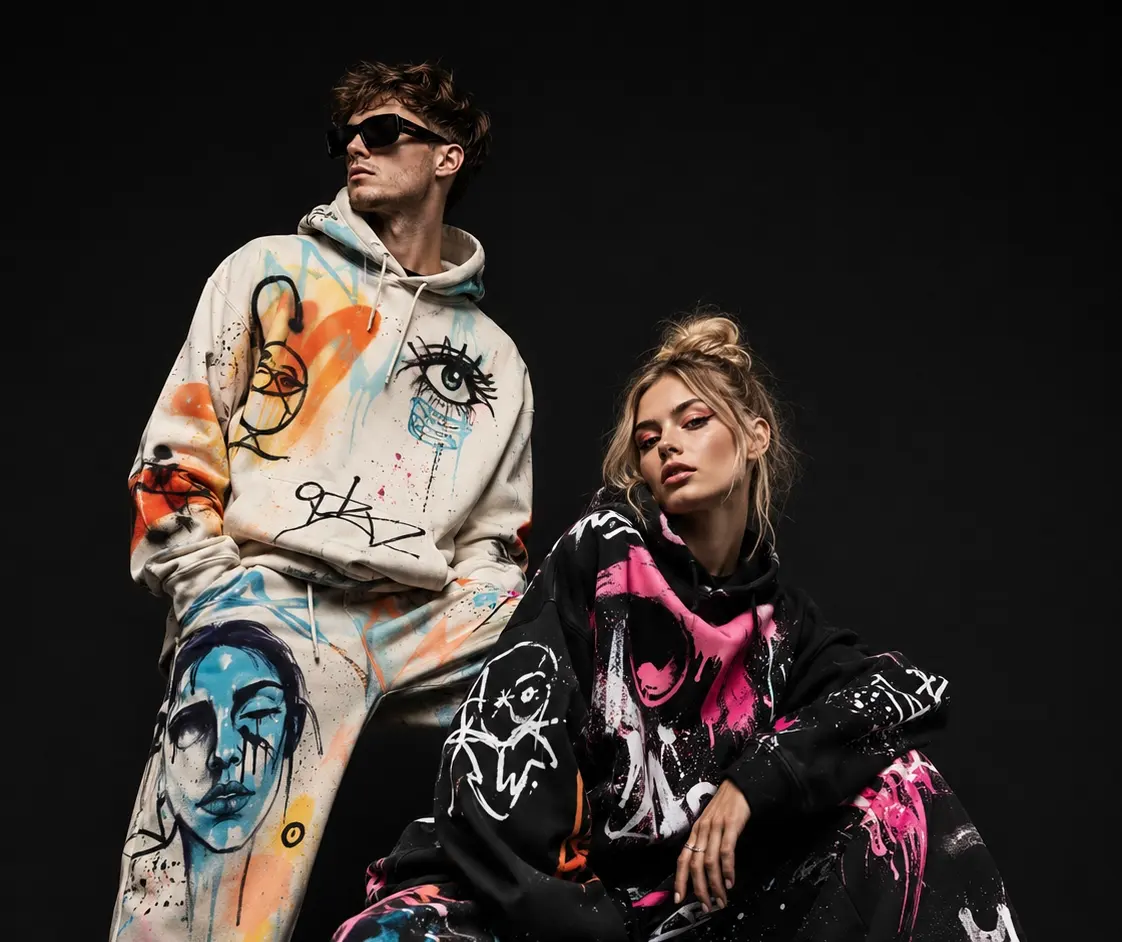
Explore custom hoodie manufacturing, custom T-shirt manufacturing and our manufacturing reference library. A puff print and flocking sweatshirt reference illustrates a decorated product direction; confirm your own materials, artwork and final specifications through sampling.
Coordinate the finished garment with private labels and packaging and review STX factory information when assessing production capability.
Example Review: Puff Print and Flocking on a Sweatshirt
The puff print and flocking sweatshirt reference is a starting point for discussing two different surface effects in one design. Review the product images and specify your own artwork, placement and materials; a reference image does not establish test results for a new order.
- Raised print: agree the intended height, edge definition, hand feel and graphic dimensions on a trial sample.
- Flocked areas: review texture, coverage, placement and the appearance required by the artwork.
- Combined finish: confirm the production sequence and inspect the decorated garment after the agreed care trial; record acceptable changes before bulk production.
For an embroidered alternative, compare the screen-print and embroidered-patch sweatshirt reference. Decide whether the design needs a printed surface, a stitched component or both, then confirm backing, attachment and wearer comfort through sampling.
Send the reference style with your artwork dimensions and fabric brief when requesting a decoration review. Final suitability, quotation and schedule depend on your approved specification.
Prepare Your Apparel Printing and Embroidery Brief
- Vector artwork where available, plus clear reference images and garment mockups
- Graphic dimensions, placement measurements and color references
- Fabric composition, GSM, garment color and intended wash or finish
- Preferred technique, hand feel, effect and care or testing requirements
- Quantity by style and color, sample needs, budget and target delivery
Discuss project MOQ and bulk pricing with the full specification. Ask which setup or development costs are separate from the unit price and which sample approvals are required.
Send Your Artwork / Request a Decoration Quote
How Do I Check Print and Embroidery Wash Performance?
Agree on the care method and sample review criteria before bulk production. Review cracking, peeling, fading, puckering, attachment and changes in hand feel on the actual fabric and decorated garment. Confirm the washing conditions, number of test cycles and acceptable variation for your project; a technique name alone does not establish durability.
For textile care terminology, refer to GINETEX’s textile care labelling information. Agree the care instructions for the complete garment, including fabric, decoration and trims.
Decoration and Finishing FAQ
Apparel Printing and Embroidery Questions
Screen printing is suitable for scalable graphic production, DTG is useful for detailed full-color artwork, and heat transfer can work for smaller runs or special effects. The final choice depends on fabric, artwork and quantity.
Yes. Raised effects can be developed for hoodies, but fabric weight, surface texture, washing and placement should be tested first.
Yes. Stitch density, backing and placement need to be adjusted so the embroidery looks clean and remains comfortable.
They can. Washing and dye processes should be tested with the selected print or embroidery method before bulk production.
Vector artwork is preferred for logos and screen printing. High-resolution files, placement measurements, Pantone references and garment mockups help speed up review.
ABOUT STX GARMENT
HAVE A QUESTION? CONTACT US
Prepare your artwork, placement measurements, fabric specifications and reference images, then complete the manufacturing inquiry below or send your tech pack.