Puff Print Hoodies: A Sampling and Quality Control Guide for Clothing Brands

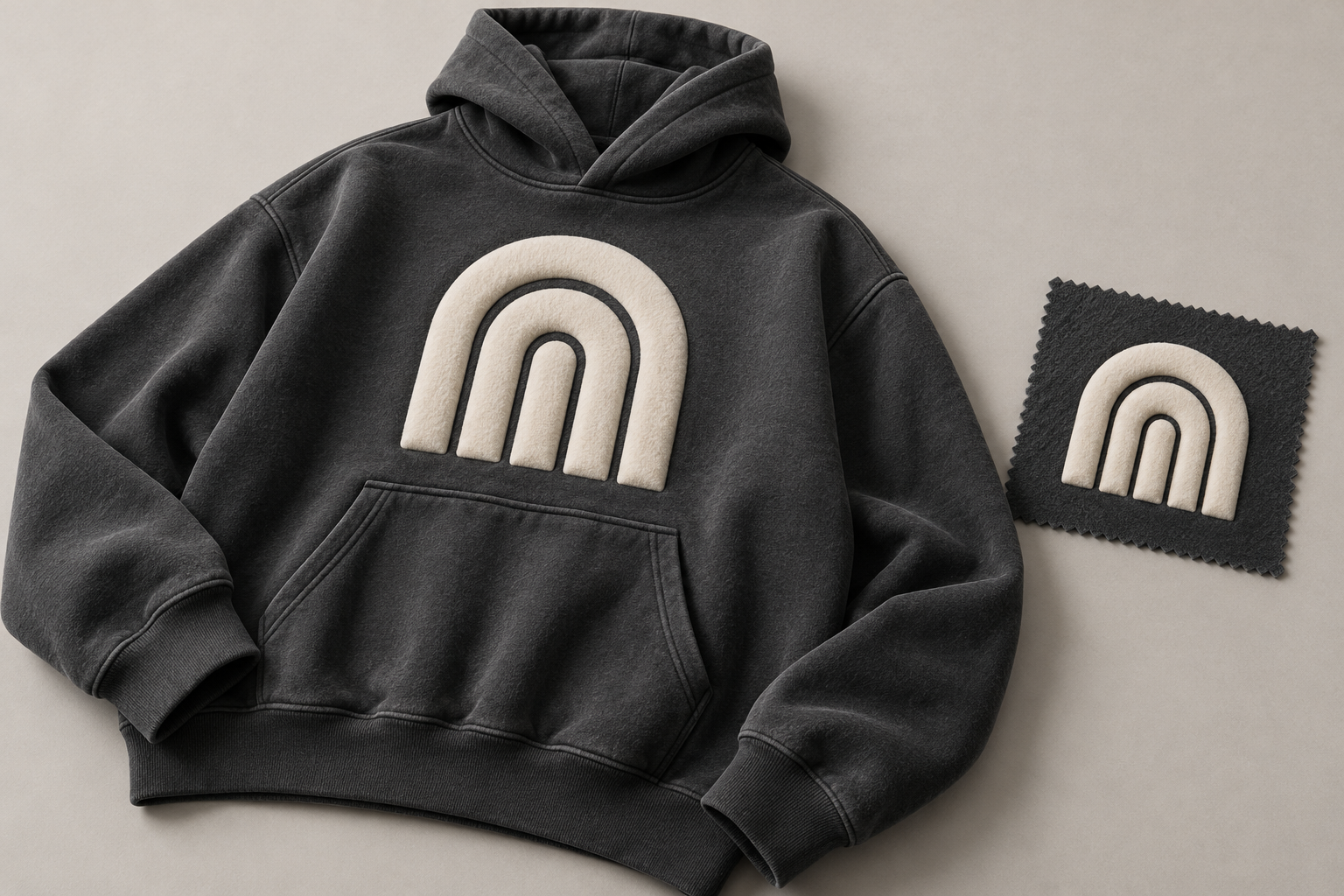
Puff print hoodies should be approved on the intended hoodie fabric and finished garment before bulk production. A useful approval defines the artwork, raised effect, placement, cured color, finishing route and care criteria. A successful print on an unrelated T-shirt does not establish the result on heavyweight fleece.
For clothing brands, a distinctive graphic is only one part of the brief. Fabric, fit, ink and finishing affect the final appearance. This guide explains how to turn a reference image into sampling decisions for custom streetwear production.
Define the effect for puff print hoodies
Start with an effect reference rather than the instruction “make it puffier.” Do you want a subtle raised logo, rounded lettering or a pronounced graphic mixed with flat printing? Record which areas should rise and which should stay flat. Also specify edge definition, legibility, color, surface feel and flexibility.
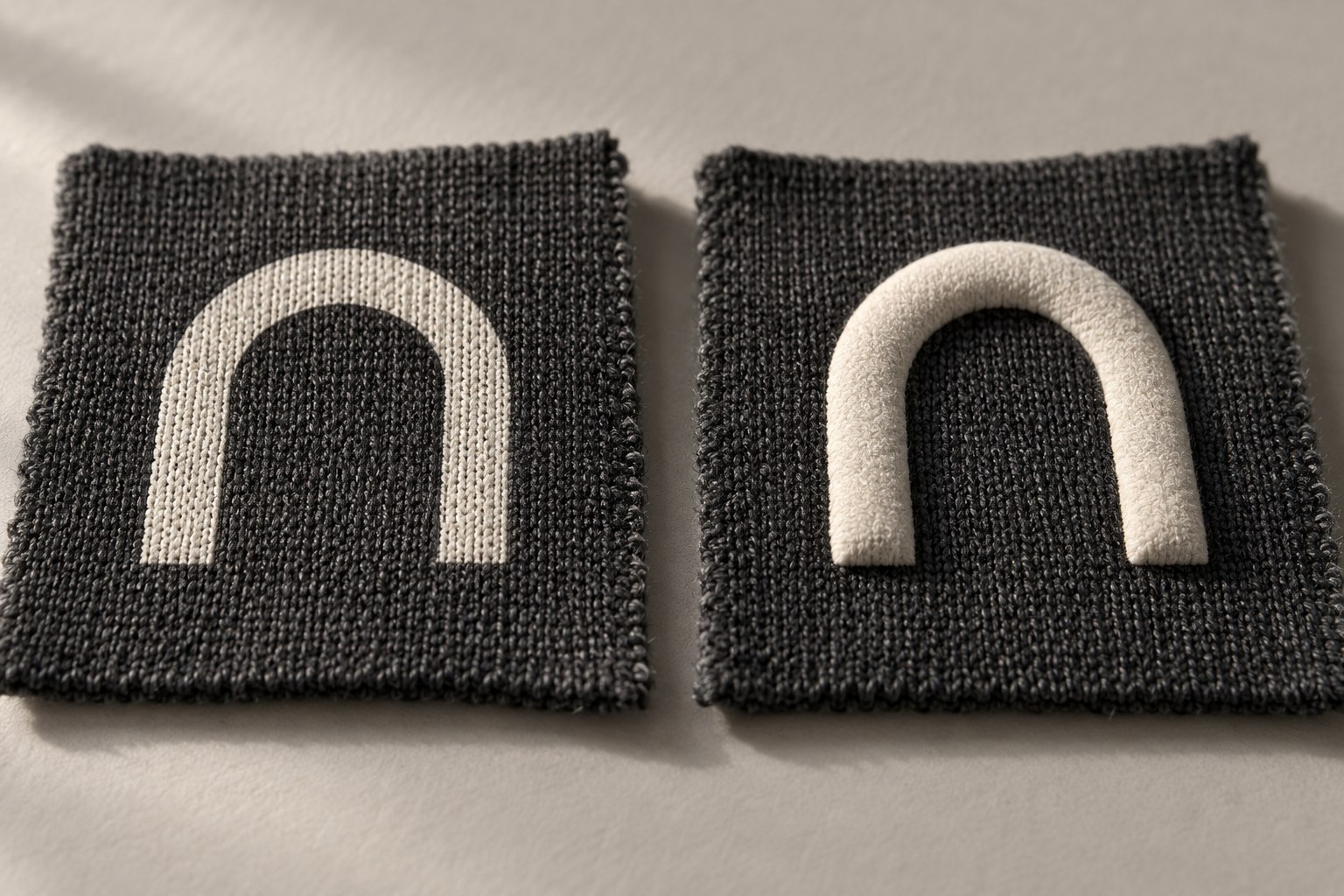
Puff print, high-density printing and other dimensional techniques are different processes. Ask the manufacturer to identify the proposed route. Then compare a physical sample with your reference under consistent lighting. Keep the approved sample as the visual standard.
Choose fabric for puff print hoodies
Specify fiber composition, knit structure, finished GSM, garment color and any dye or wash treatment. GSM describes mass per unit area; it does not explain the surface, stretch, finish or heat response. Read our fabric GSM guide when comparing hoodie materials.
A dense fleece and French terry can need different trials even at similar weights. Use the intended material for the print sample. If it changes later, review whether another trial is needed.
Avient’s ink-curing guidance explains that fabric and ink variables affect curing. The practical implication is to validate the selected system on the actual garment. A dryer setting alone does not prove that the ink layer has cured correctly.
Prepare artwork for puff print hoodies
Provide editable artwork and a mockup showing the graphic at its intended dimensions. Mark raised areas, flat areas, colors and placement references. Fine lettering and narrow gaps deserve a trial at the actual print size because the expanded surface may change their definition.
For a zip-up hoodie, show the graphic relative to the zipper, pocket and seams. A design that crosses the center opening needs an explicit alignment and printing plan. Agree any artwork revision before sampling; do not leave changes to an unrecorded production decision.
Your clothing tech pack should keep these instructions together with the size chart and construction details. Give each artwork version an identifier so the factory knows which file is approved.
Build a sampling matrix for puff print hoodies
Change one important variable at a time where practical. This makes sample comparisons more useful than a collection of unrelated effects. The matrix below is a planning tool, not a compulsory test standard.
| Question | Sample comparison | Approval decision |
|---|---|---|
| How much relief suits the graphic? | Two proposed effects on the same material | Appearance, feel and readable detail |
| Does the artwork need revision? | Original and revised artwork at actual size | Letter spacing and edge definition |
| Does placement work? | Finished garment with pocket and zipper references | Position and alignment |
| Does the finish affect the print? | Samples using the proposed finishing route | Final shade, dimensions and print condition |
Label retained samples with the fabric identifier, artwork revision, color and finishing route. For the wider approval sequence, see our garment sampling process.
Follow product-specific ink instructions
Request the current technical data sheet for the proposed ink or additive. Instructions for one product are not a universal recipe for puff print hoodies.
For example, Avient’s Flexipuff Additive data sheet, revised March 15, 2023, notes potential color lightening and puckering with large print areas on lightweight fabric. These are supplier statements about that product. They do not establish that STX uses it or that another system behaves identically.
Approve the cured color rather than relying only on the artwork file. If the ink, fabric or process changes, ask the technical team which checks must be repeated. Keep any alternative decoration route separate in the quotation.
Coordinate washing and decoration
If the design includes garment dye, enzyme washing or another finish, describe it at the brief stage. Ask for the proposed sequence of printing and finishing. Evaluate a sample after the planned final stage rather than approving an intermediate appearance.
Check the garment shade, print condition, measurements and hand feel together. A deliberately worn appearance still needs an agreed acceptable range. Record which variation is intentional and which would count as a defect.
Our craftsmanship overview can help you compare printing and wash directions before requesting a project-specific trial.
Quality checks for puff print hoodies
Define the visual checks first: correct artwork, placement, readable details, edges, shade and unwanted marks. If print height matters, agree a measurement method or a physical reference. Avoid a height claim that no one has defined how to measure.
Next, agree care evaluation with the supplier. Record the procedure, conditions and acceptance criteria for the intended product. There is no single wash-cycle promise in this guide. Results depend on the material, ink, process and evaluation method.
Finally, connect print approval with fit, trims and construction approval. A graphic that works on a fabric swatch can still sit poorly on the finished hoodie. Keep the approved garment and specification available for production checks.
Buyer questions about puff print hoodies
Can I start with 50 hoodies?
STX’s published standard hoodie MOQ is 100 pieces per style and color. A 50-piece brief therefore needs a different sourcing plan or a revised quantity. Custom materials and finishes may require higher minimums. Confirm the quantity for each color before requesting a quote.
Is 400 GSM enough to specify the material?
No. Add the fiber composition, fleece or terry structure, surface feel, color and finish. Approve the intended material alongside the print. Weight alone cannot establish print quality or garment comfort.
Can a puff graphic cross a full zipper?
It needs a project-specific feasibility review. Supply the garment drawing, zipper details, artwork dimensions and alignment requirement. Ask for a finished-garment sample before approving that placement.
Do I need a complete tech pack to discuss the project?
A concept and references can start an ODM discussion. Before production approval, however, convert the agreed decisions into controlled specifications. This helps both parties identify missing information and price the same product.
Prepare a comparable quotation brief
Send the same specifications to every supplier: material, fit, print dimensions, colors, positions, finish, quantity by style and color, size breakdown, labels and packaging. Ask whether trials, screens, revisions and agreed evaluations are included.
Also provide the destination, target budget and launch date. A delivery proposal must account for approval stages and material availability. Separate a simpler alternative from the original brief so a lower price does not hide a changed specification.
Plan your STX hoodie sample
STX Garment supports B2B custom hoodie development and lists puff printing among its decoration options. Review our custom hoodie manufacturing service, then send your hoodie brief for technical review. Include the artwork, intended fabric, reference effect and quantity per color. The team can confirm feasibility, sampling scope, price and timing for your project.
Sources and editorial context
Recent context: Première Vision’s AW 27–28 material forecast (September 23, 2026) discusses texture and dimensional surfaces. It is design context, not evidence of growing demand for puff printing. A public buyer discussion, checked October 9, illustrates questions about heavyweight zip-up hoodies, ready artwork and first-order quantities; one discussion does not represent the global market.
Technical references: Avient Flexipuff Additive V1.04 (March 15, 2023) and Wilflex ink-curing guidance (2020 document). Company information: STX’s public hoodie and craftsmanship pages, checked October 9, 2026. These sources support process planning; this article does not report STX laboratory results.