
Hoodie Shrinkage Testing: Set Wash Limits Before Bulk

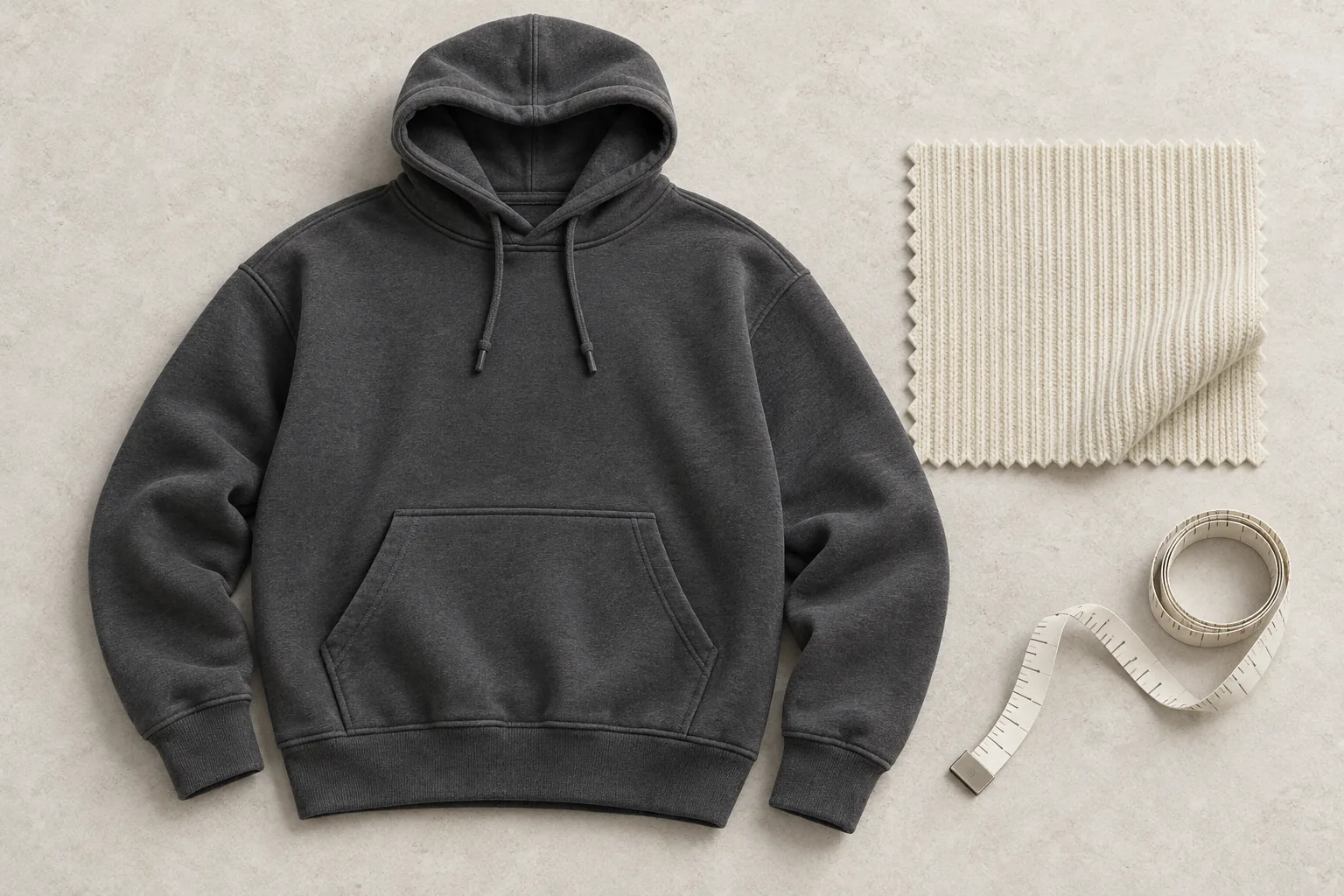
Hoodie shrinkage testing should confirm the finished garment under an agreed wash-and-dry procedure before bulk cutting. Specify the fabric and finish, define measurement points, agree acceptance limits, and review both dimensional change and fit. A soft first sample or a “pre-shrunk” description does not establish how the hoodie will behave in customer care.
This matters to brands choosing blanks as well as custom production. In a public sourcing question, one prospective brand buyer worried that washed hoodies and tees seemed much smaller. That is an individual report, without a controlled test or verified defect rate. It nevertheless identifies a useful purchasing question: what evidence should support approval?
Search interest and hoodie shrinkage testing priorities
A Google Trends comparison checked on October 12, 2026 used the literal terms “hoodie shrinkage” and “cotton hoodie,” Worldwide, past 12 months, all categories and Web Search. The chart showed average relative indices of 0 and 21; “hoodie shrinkage” had insufficient related-query data. A separate United States past-90-days chart showed 0 and 39. Zero is not proof of zero searches, and the independently normalized charts cannot establish growth, sales or B2B demand. Hoodie shrinkage testing remains an approval decision supported by care requirements and sample evidence.
Separate sewing tolerance from wash change
A garment may meet its finished measurement chart before laundering and still lose the intended fit afterwards. Record two requirements: the allowable variation in delivered measurements, and the allowable change under the agreed care procedure. Treating them as one tolerance can hide the problem.
AATCC TM150-2025 addresses length and width changes of garments after home laundering. Its public scope includes different washing, agitation and drying options and notes a limitation for some stretch fabrics. Ask the laboratory to select the applicable option and current method; the public summary is not the full test procedure.
Do not copy a percentage limit from another brand without checking the fit and care assumptions. A cropped hoodie, a long sleeve and a close neckline may need different approval decisions even when their percentage changes appear similar.
Why heavyweight cotton still needs checking
CottonWorks explains shrinkage and skewing as issues involving construction, processing and garment care. The useful manufacturing implication is to trace the material and finishing route rather than treating GSM as a stability guarantee. Body fabric and trims can also change differently, affecting seams and fit.
For your order, identify the approved fabric reference, composition, finished weight, color and finishing sequence. If a new dye lot, wash recipe or fabric source replaces the approved material, determine what needs rechecking. A sample from another fabric lot cannot automatically establish the bulk lot’s behavior.
STX’s fabric development and sourcing page describes shrinkage and compatibility review. Ask which checks apply to your selected material and whether external testing is needed. An available development service does not establish a particular result for an untested order.
Write the hoodie shrinkage testing brief
Give the supplier and laboratory one version-controlled brief. Start with the care direction you intend to recommend, then resolve the test details with the technical team. If you expect customers to tumble dry, a line-dry-only result does not answer that use case.
| Item | Buyer decision | Approval evidence |
|---|---|---|
| Material identity | Fabric reference, color, lot and finish | Traceable sample and supplier specification |
| Care procedure | Wash, drying and agreed checkpoints | Laboratory method and recorded conditions |
| Measurements | Consistent points and measuring approach | Before/after values for each garment |
| Acceptance | Delivered size limits and wash-change limits | Signed criteria and disposition |
| Appearance | Seams, rib, hood and decoration | Photographs and fit-review comments |
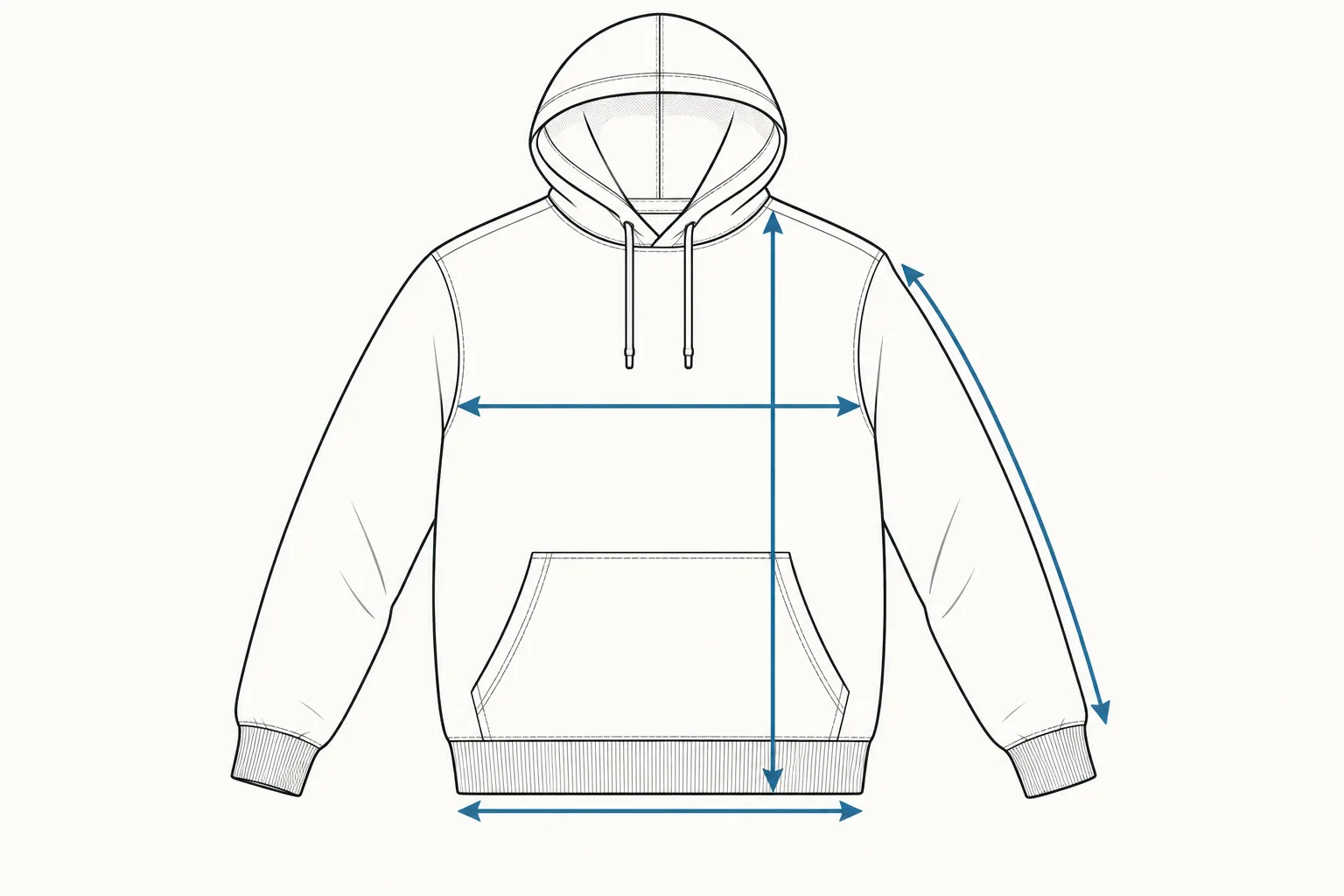
Record chest width, body length, sleeve length and hem width using diagrams appropriate to the actual construction. Add hood opening or other critical points where fit depends on them. State whether rib is included in a length measurement. Keep the same endpoints and avoid stretching the garment to reach a desired value.
A useful calculation is dimensional change (%) = (after minus before) divided by before, multiplied by 100. A negative result indicates reduction. This calculation organizes your record; it does not replace the method’s preparation, measurement and reporting requirements.
Hoodie shrinkage testing: inspect the whole garment
Review the relationship between body fabric, cuffs, waistband and hood lining. A chest measurement alone can miss a puckered hem, a distorted pocket or an uncomfortable neck opening. Photograph the same views consistently and retain comments beside the measurement sheet.
For decorated styles, inspect the agreed artwork area and surrounding fabric after the same care procedure. Confirm whether the concern is size change, local distortion, shade, surface appearance or attachment. Each needs a suitable assessment; one wash check does not prove every kind of durability.
STX’s sample development support describes fit, size-set and pre-production samples. Use those stages to resolve material and trim combinations. If the care route remains uncertain, Contact STX Garment with the fabric reference and intended use before requesting a fixed production scope.
Release bulk through clear approval gates
- Review materials: approve the identified body fabric, rib and finish, with testing responsibilities recorded.
- Review the garment: compare delivered measurements, wash results and post-care fit against the written criteria.
- Resolve exceptions: change the material, process or pattern where needed and verify the revised combination.
- Control bulk changes: require written review before substituting a material or changing an approved finish.
If the hoodie fails, enlarging every pattern piece is not an automatic solution. Identify which dimensions change and whether the process is consistent. Compensation may be appropriate for a stable, verified route; a variable route needs correction before grading or cutting.
Budget for hoodie shrinkage testing, laboratory work where required, revisions and approval time. These costs should be visible in development planning. Simplifying colorways or using an established material can reduce variables, but it does not remove the need for evidence.
Hoodie shrinkage testing FAQ for clothing brands
Does “pre-shrunk” mean zero shrinkage?
No. Request results for the specified garment and care procedure. The term alone does not state residual change, test conditions or an acceptance limit.
Can one medium sample approve every size and color?
It can support an initial review, but confirm a risk-based plan with the supplier. Different materials, finishes or critical size proportions may require additional checks. A small-batch founder’s public discussion raises consistency across sizes and colors; it supports this question, not a universal sampling rule.
Should fabric testing replace finished-hoodie testing?
Use fabric results to investigate the material. The finished hoodie adds seams, rib, lining and decoration, so garment-level approval addresses interactions a swatch cannot show.
What if wash limits and the target fit conflict?
Review the material and processing route first, then the pattern and care direction. Agree the revised criteria explicitly and retain a new approved reference before bulk release.
Hoodie shrinkage testing in your production request
Use STX’s custom hoodie development service to discuss the material-and-fit combination. Its public starting MOQ is 100 pieces per style and color; indicative sampling is 7–10 days and bulk production 30–45 days after approvals. Confirm testing, revisions, special materials and the actual schedule for your project.
When the scope is defined, Submit Your Tech Pack for a Quote with quantities by color and size, fabric and rib references, finished measurements, wash criteria, decoration, destination and required delivery date. Include who approves test results and how changes will be authorized.