









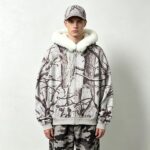
Tree camo hoodie: branch print and hood trim
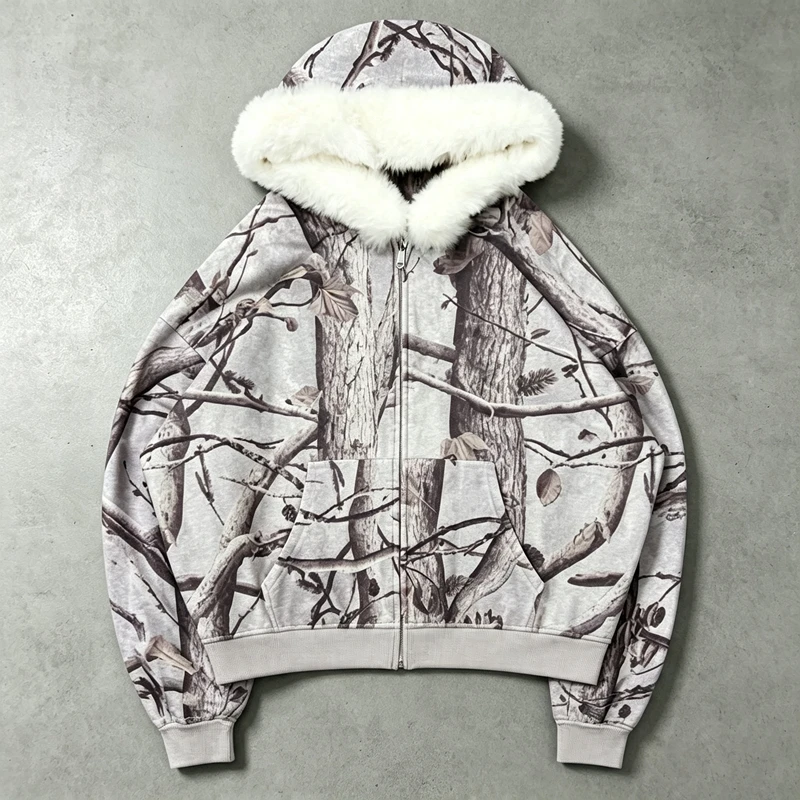
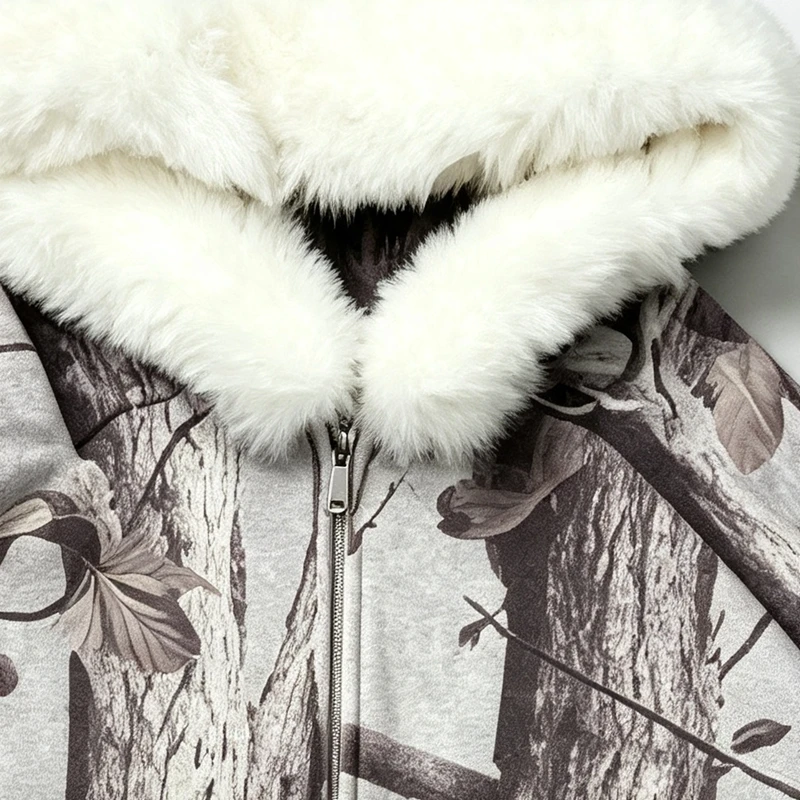
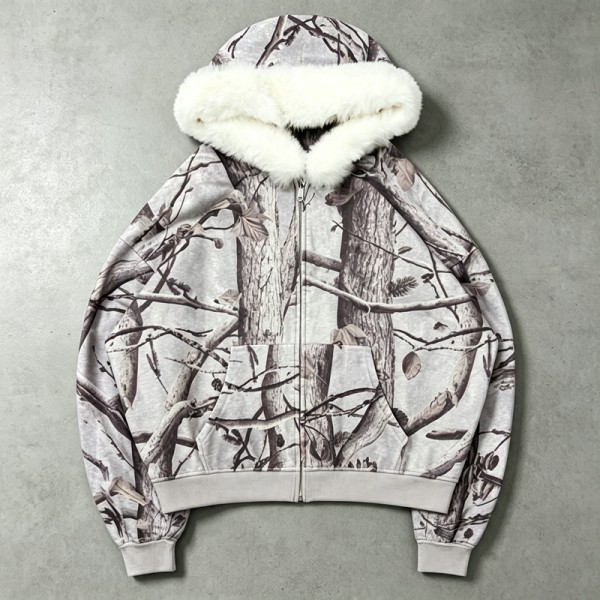
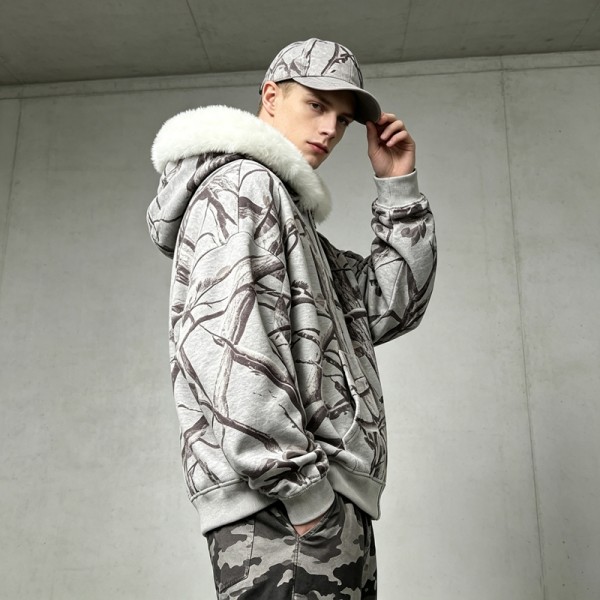
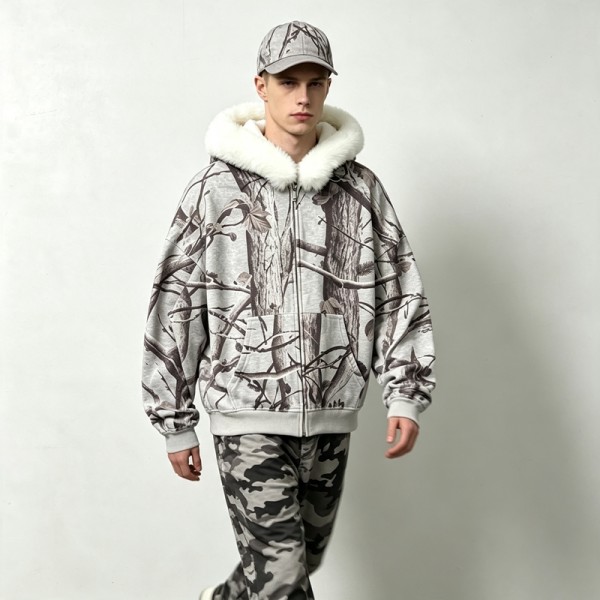
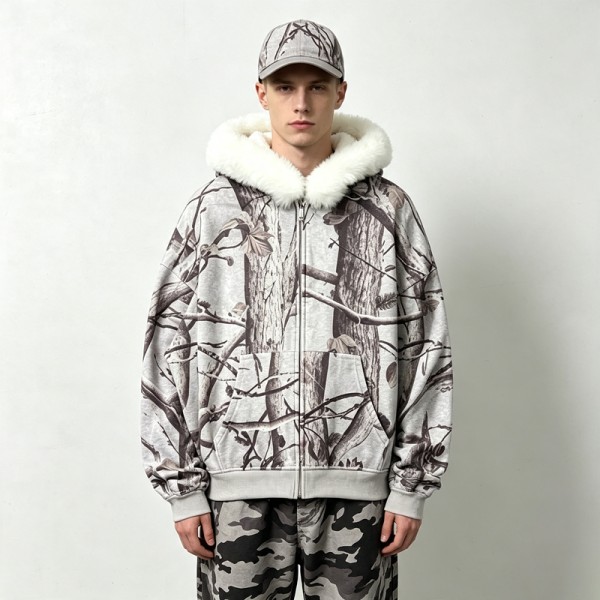
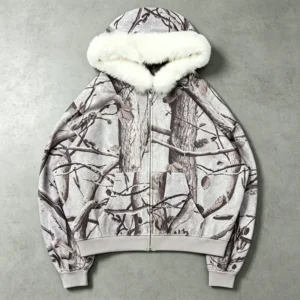
This tree camo hoodie reference combines a pale ground with brown and grey branch, bark and leaf motifs. A white fluffy trim frames the hood opening, contrasting with the fine woodland artwork across the body and sleeves.
The compact, broad body has a front zipper, split front pockets and light rib cuffs and hem. Photos do not confirm the print method, fleece composition, fabric weight or trim fiber content. Develop those details through material review and physical sampling.
Tree camo hoodie design and fit
- Woodland artwork: specify branch scale, repeat size and contrast on a pale ground.
- White hood frame: define pile height, density and attachment without obstructing the zipper.
- Boxy zip silhouette: set body length and width independently of sleeve length.
- Light rib edges: coordinate cuff and hem shades with the printed fabric.
Tree camo hoodie specification checkpoints
| Item | What to approve |
|---|---|
| Printed body | Original or licensed artwork, repeat size, color standards, fabric composition and target GSM. |
| Hood trim | Verified fiber content, pile height, density, backing and fixed or detachable attachment. |
| Fit | Body width and length, hood depth, sleeve shape, cuff opening and graded measurements. |
| Zipper and pockets | Closure length and operation, pile clearance, pocket openings and attachment strength. |
| Care testing | Review shedding, matting, print fading, rib color transfer and dimensional change using the proposed care process. |
| Branding | Private labels, tested care information, size identifiers and packing. |
Current camouflage styling context
Vogue Taiwan’s September 2026 camouflage report discusses camouflage in autumn street styling. This hoodie uses a pale woodland interpretation and a contrasting hood frame. That visual direction does not establish outdoor protection, hunting performance or a warmth rating.
From tree camo hoodie sample to production
- Send artwork, a measurement chart, trim references and quantities.
- Review printed fabric and hood-trim swatches before assembling a sample.
- Approve fit, hood visibility, zipper clearance and care-test results.
- Finalize inspection criteria, packing, schedule and delivery terms before bulk production.
Hoodie manufacturing · Artwork application · Trim sourcing · Sample development
Design Reference Images




Tree camo hoodie FAQ
Can we use our own woodland pattern?
Yes. Submit original or licensed artwork with its repeat dimensions and color standards. Approve the branch scale on the body and sleeves, then review how the pattern crosses the zipper and pocket edges.
Is the white hood trim synthetic and detachable?
The photos do not verify fiber content or detachment. Specify a verified synthetic pile if that is your requirement, and choose a fixed or removable attachment in the tech pack. Approve the fastening and backing on a sample.
How can we prevent the trim shedding or matting?
Review pile quality, backing and edge construction before assembly. Test the proposed care process on the trim and complete garment. Define acceptable shedding and appearance change, then base the care label on the approved results.
Can the trim interfere with the zipper or vision?
Check clearance beside the slider and around the face during fitting. Adjust pile width, hood depth or attachment position if needed. Test the closure repeatedly with the hood both raised and lowered.
Does this hoodie guarantee winter warmth?
No performance rating is established by the reference images. Specify the intended use, fabric structure, weight and lining requirements. Review a physical sample and any required testing before making warmth or protection claims.
What affects MOQ, price and lead time?
Printed-fabric sourcing, artwork setup, pile trim, attachment construction and quantities affect the quote. Send your brief to confirm sample scope, MOQ, cost inclusions and a schedule after material approval.
Request a tree camo hoodie RFQ
- Authorized woodland artwork, repeat size and color standards.
- Body fabric composition, target GSM and fit measurements.
- Trim fiber requirement, pile reference and attachment preference.
- Quantity by size and color, zipper details and care-test criteria.
- Labels, packing, destination and requested delivery date.