



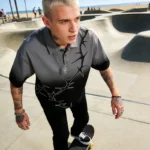
Thorn embroidered polo: graphic placement development
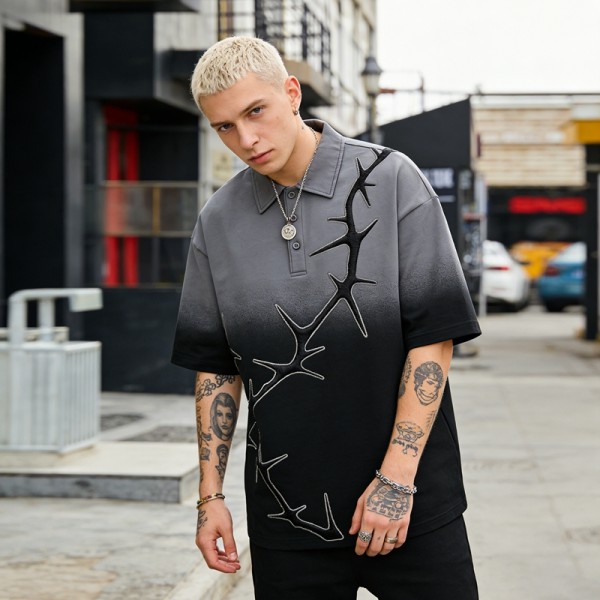
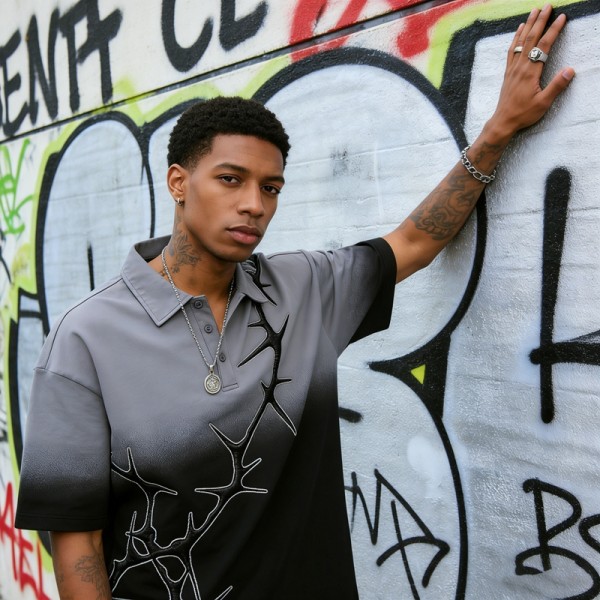
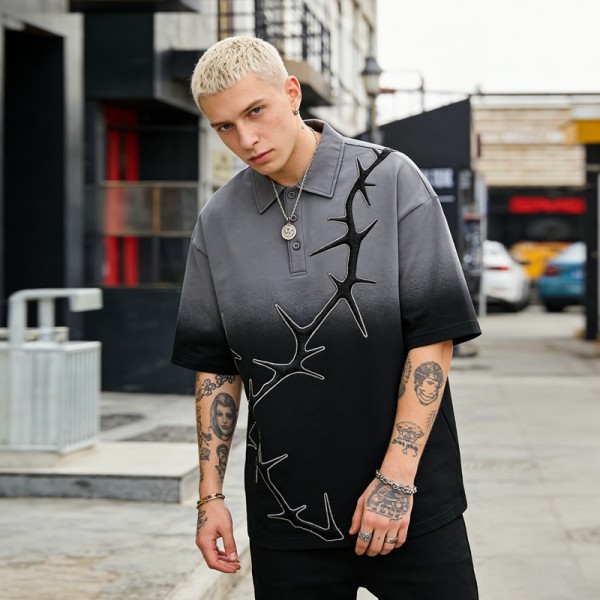
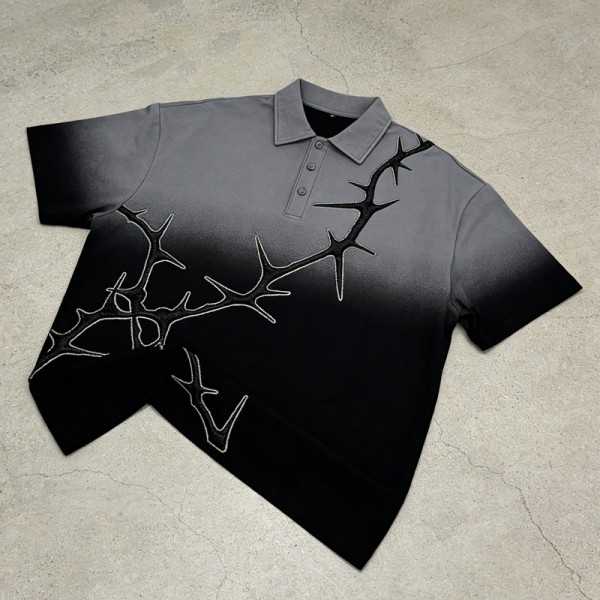
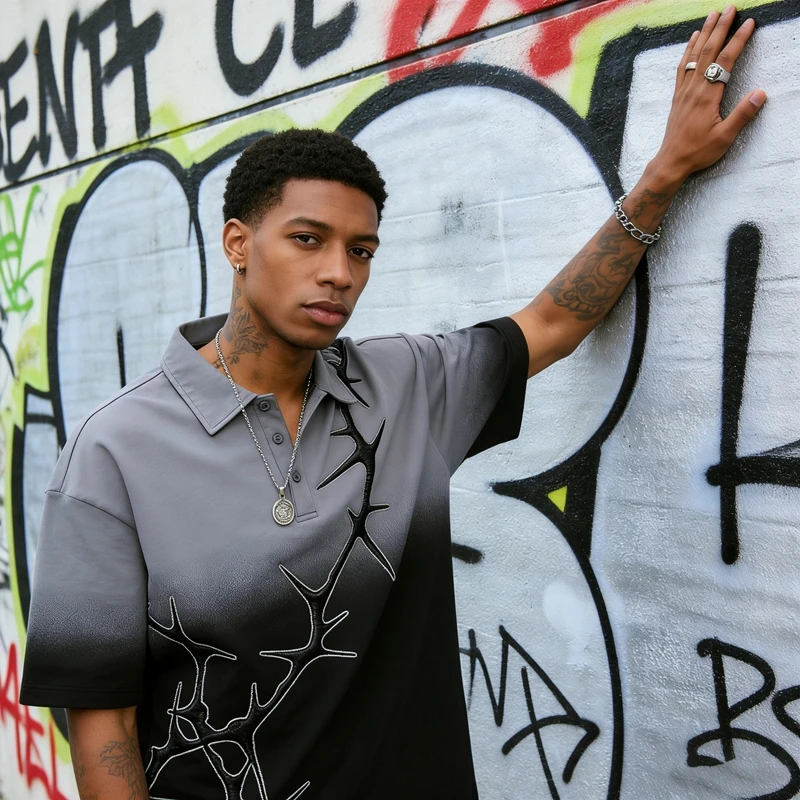
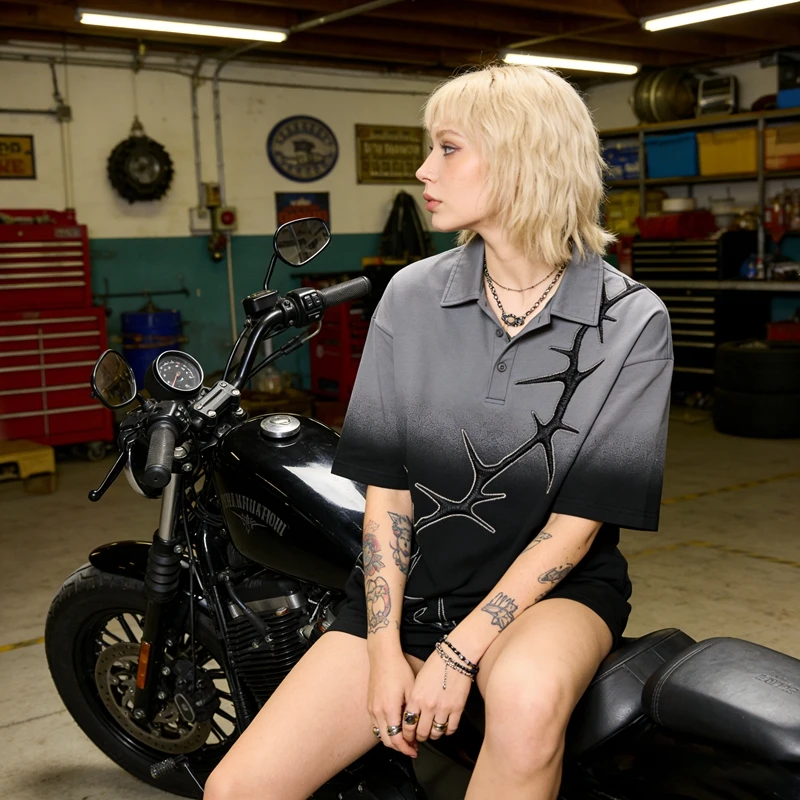
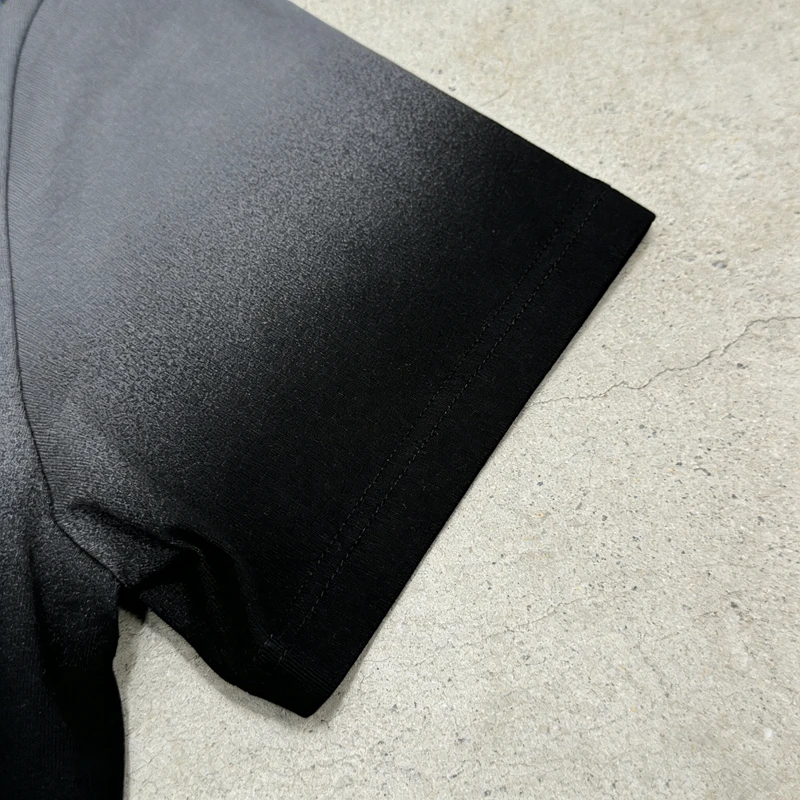
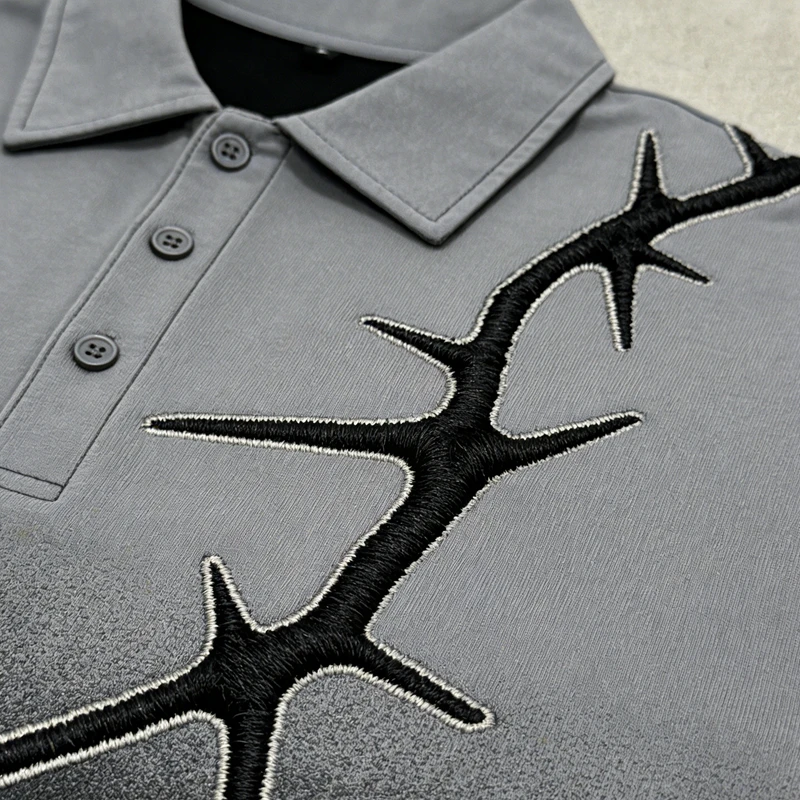
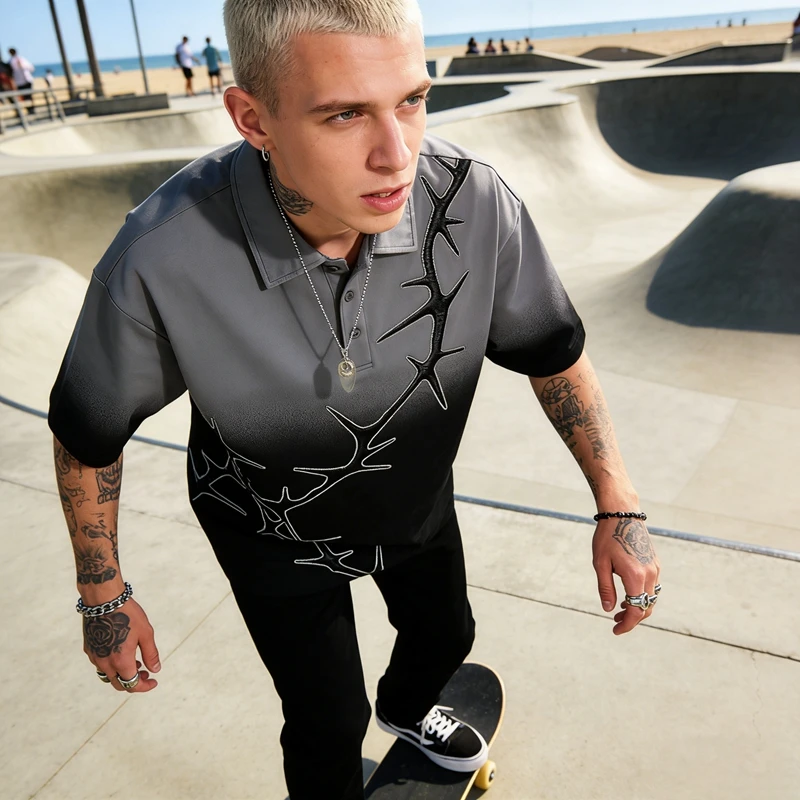
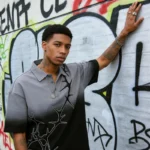
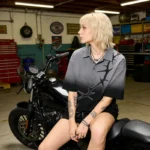
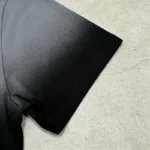
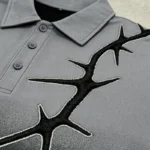
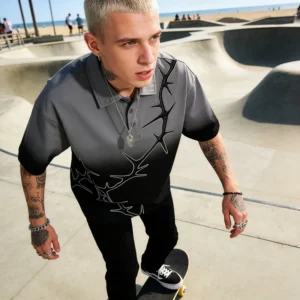
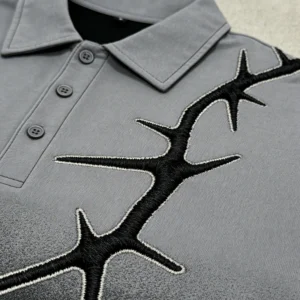
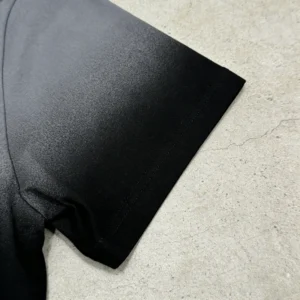
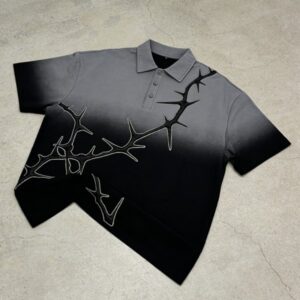
This thorn embroidered polo reference combines a folded collar and short button placket with large branching artwork across the front. The grey version transitions toward black at the lower body and sleeve edges; a close-up shows dark stitched shapes with a pale outline.
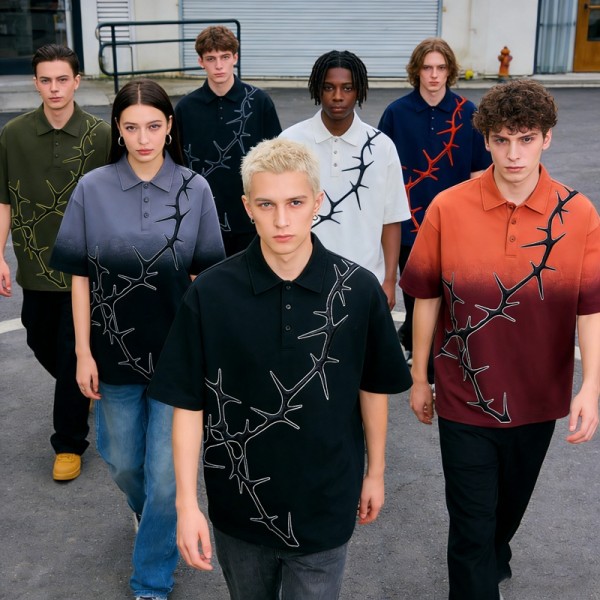
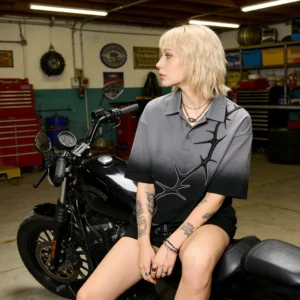
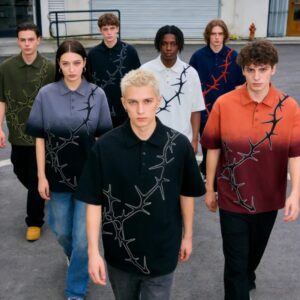
The relaxed short-sleeve silhouette provides space for the diagonal motif. Group photos show additional green, blue, pale and orange color directions. Confirm the embroidery construction, shade process, composition and GSM on the approved sample rather than assuming a particular dip-dye or raised embroidery technique.
Thorn embroidered polo design decisions
- Diagonal artwork: map the branch path from the shoulder area toward the lower body.
- Outlined stitches: approve the pale edge, dark fill and fine pointed tips.
- Gradient ground: define upper and lower shades and transition height.
- Collar and placket: balance graphic clearance with button spacing and collar shape.
Thorn embroidered polo sample checkpoints
| Item | Approval requirement |
|---|---|
| Fabric | Composition, knit structure, target GSM, stretch and post-wash dimensions. |
| Shade | Physical upper/lower color standards, transition width and acceptable variation. |
| Embroidery | Authorized artwork, placement dimensions, thread colors, density, edge definition and backing. |
| Comfort | Skin contact, bending flexibility and bulk where the motif crosses the chest and lower body. |
| Collar | Shape, stiffness, placket construction, button attachment and curling after washing. |
| Wash | Check puckering, shade transfer, stitch distortion and shrinkage before approving care information. |
Current polo styling context
GQ’s 2026 polo edit provides current styling context for the collared silhouette. This reference develops a more graphic direction through diagonal thorn artwork and a shaded ground. Keep your own artwork, fit and material choices central to the brief.
From thorn embroidered polo sample to production
- Submit artwork, shade references, a size chart and quantities.
- Review embroidery on the selected fabric and a completed fit sample.
- Approve placement grading, backing comfort and wash results.
- Confirm the specification, inspection criteria, packing and delivery schedule before bulk production.
Embroidery development · Fabric sourcing · Sample development · Private labels
Design Reference Images
Thorn embroidered polo FAQ
Can we replace the thorn motif with our own artwork?
Yes. Provide original or licensed files and exact placement dimensions. Review pointed tips, outline thickness and the path across the body. Approve the stitched trial before developing size grading.
Is the embroidery necessarily a raised 3D technique?
The close-up supports a stitched appearance but does not establish foam, padding or a particular raised technique. Specify your desired height and hand feel, then approve construction, density and backing on a sample.
How do we avoid embroidery puckering after washing?
Review fabric stability, stitch density and backing together. Test the completed decorated sample using its proposed care process. Inspect the edges and surrounding fabric for distortion before approving bulk standards.
Can we change the gradient colors and transition height?
Yes. Supply physical shade references and a drawing marking the transition. Compare feasible color processes on the actual fabric and check compatibility with threads and buttons. Approve an acceptable shade range.
How can we reduce collar curling and scratchy backing?
Review collar construction and shape after the agreed wash test. Check underside embroidery contact during fitting and approve a backing treatment suited to the fabric and motif. A close-up alone cannot establish comfort.
What affects MOQ, cost and schedule?
Fabric sourcing, shade trials, embroidery digitizing, stitch complexity and quantities affect the quotation. Send your brief to confirm MOQ, sample scope, cost inclusions and lead time after approval.
Request a thorn embroidered polo RFQ
- Authorized artwork, placement dimensions and thread color standards.
- Upper/lower shade references and gradient transition drawing.
- Fabric composition, knit structure, target GSM and size chart.
- Quantities, collar/button details, backing needs and wash criteria.
- Private labels, packing, destination and requested delivery date.