

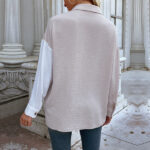
Two tone shirt: development brief
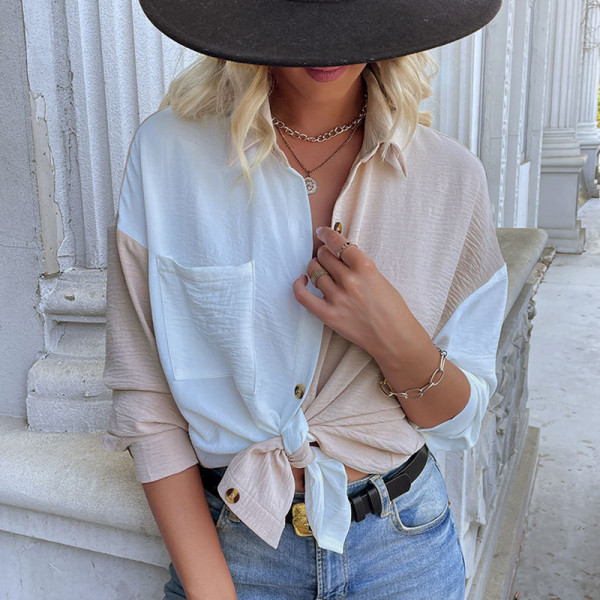
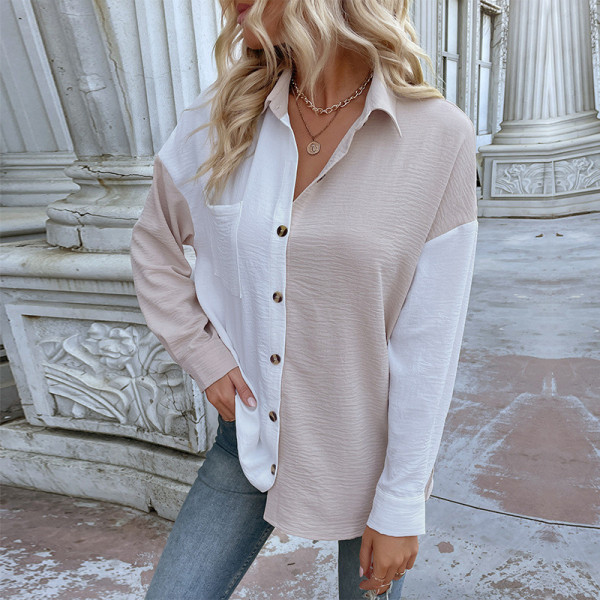
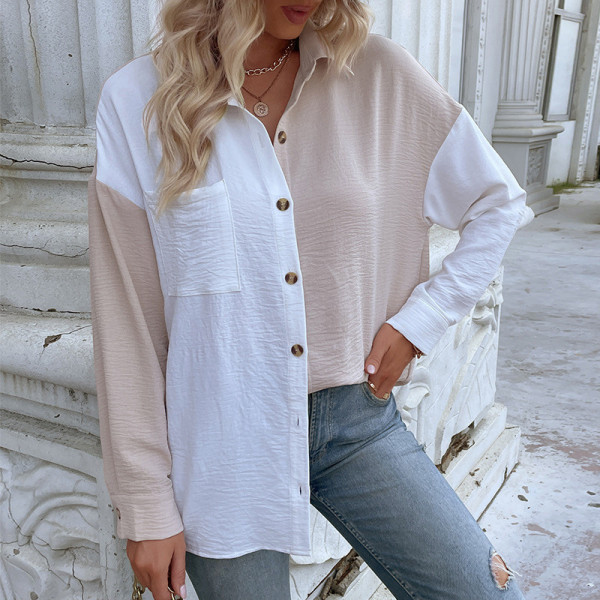
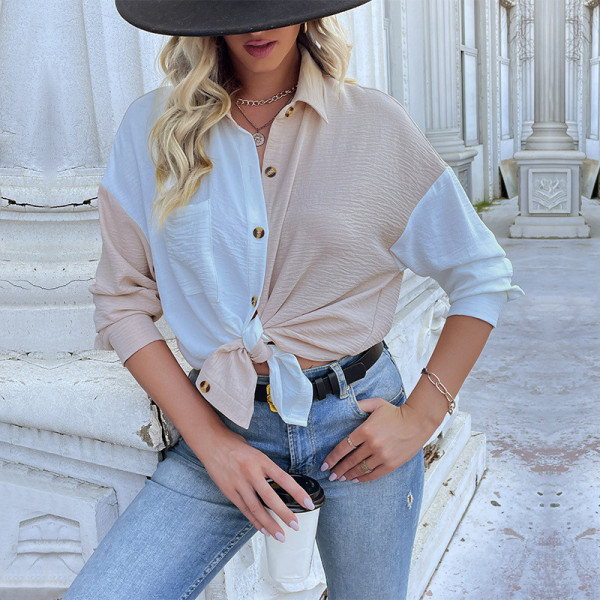
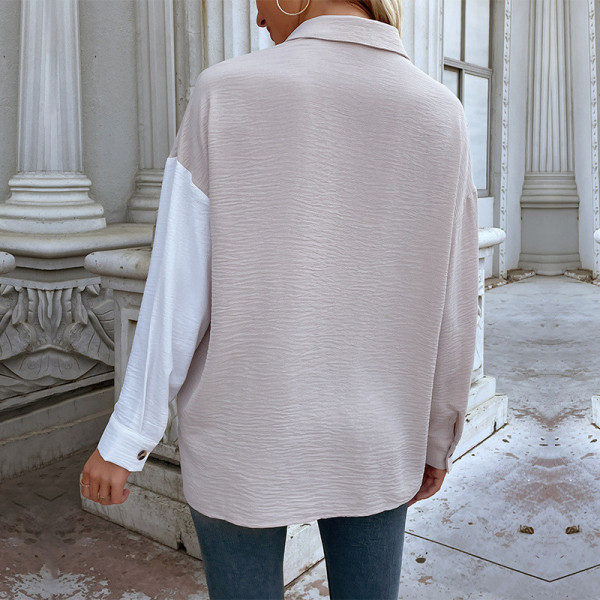
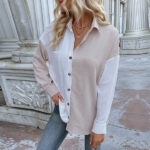
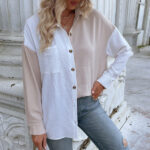
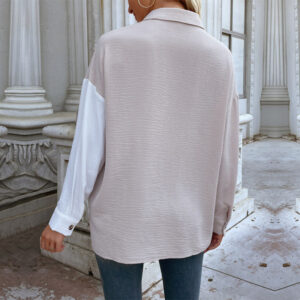
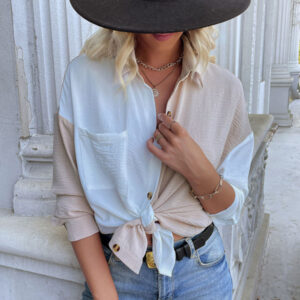
Develop a two tone shirt with white and light beige panels, a pointed collar, contrasting front buttons and a loose long-sleeve silhouette. The reference alternates the sleeve colors against the two front panels; a white chest patch pocket and a pale beige back complete the asymmetrical layout.
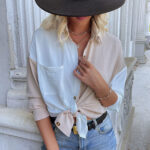
The images show the same shirt worn loose and tied at the front. The tie is a styling choice, not evidence of a sewn-in bow. Define your final hem length, pocket position and panel map, and review the fit both closed and open over a base layer.
Confirm the final composition, weight, measurements and production methods through an approved specification and physical sample. Use original or authorized artwork for your own collection.
Two tone shirt: specification and sample checkpoints
| Development item | What to approve |
|---|---|
| Fabric development | Confirm fiber composition, fabric structure, target weight, hand feel and shrinkage requirements. |
| Pattern and fit | Body width and length, neckline, shoulder, sleeves or armholes, hem and grading tolerances. |
| Panels and seam details | Provide pattern pieces and placement measurements. Confirm seam construction, alignment, contrast colors and the behavior of adjoining fabrics after washing. |
| Private labels and packing | Confirm label placement, buyer-approved care information, hangtags, size identifiers and packing instructions. |
Collection direction and proportion
Vogue’s 2026 big-shirt report describes roomy shirt proportions. For this reference, explore a loose neutral layer or a shorter variation while preserving the alternating color layout. Approve the fabric drape and opacity before choosing a seasonal styling direction.
From reference to production
- Send your tech pack, measurement chart, artwork or detail references and quantity by style, color and size.
- Review sourcing and production feasibility, sample requirements and what the quote includes.
- Approve fit, construction, decoration and agreed wash checks on a physical sample.
- Finalize the specification, quality criteria, packaging, schedule and delivery terms before bulk production.
OEM/ODM apparel manufacturing · Product development · Fabric · Craftsmanship · Trims · Private labels · Sampling · Factory · MOQ and pricing
Design Reference Images
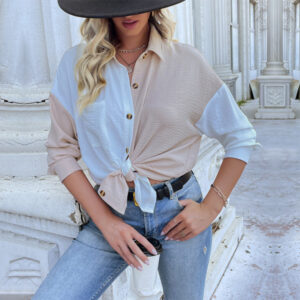
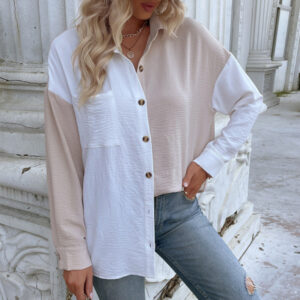
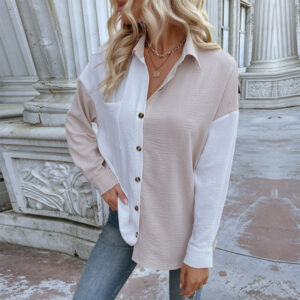
Two tone shirt: buyer questions
Can the two tone shirt panel layout be changed?
Yes, send a labeled front, back and sleeve map, including pocket and collar colors. Confirm each fabric shade with swatches and record panel placement in the approved sample and production specification.
Is the front knot built into the shirt?
The photos show the lower front tied as styling, alongside untied views. Specify whether your version uses a standard button-front hem, dedicated ties or a fixed bow; these require different patterns and fit checks.
Will the light panels be see-through?
Opacity depends on fabric structure, weight and color. Check the sample over the intended base layer in daylight and indoor lighting. If more coverage is needed, discuss a denser fabric or an appropriate lining before approval.
How do you avoid uneven shrinkage between colors?
Approve compatible fabric weight, stretch and care requirements for adjoining panels. Measure each color and the assembled shirt after the agreed wash procedure, checking seam waviness, puckering, color transfer and overall dimensions.
Can the body length, pocket and sleeve fit be customized?
Provide chest ease, shoulders, body and sleeve lengths, cuff width and pocket measurements. Review untied and tied wearing options on the sample, with size grading that preserves the intended panel proportions.
What determines MOQ, pricing and lead time?
Availability of both fabric colors, panel cutting, color quantities, buttons, labels, grading and packing affect the quotation. Send quantities by colorway and size and confirm material sourcing, sample scope and bulk schedule.
RFQ: define your two tone shirt
- Labeled front/back/sleeve color map and approved swatch references.
- Fabric composition, weight, drape and opacity requirements for each panel.
- Body, shoulder, sleeve, cuff, hem and pocket measurements.
- Standard hem or dedicated ties, button choice, labels and packing.
- Quantity by colorway and size, delivery target and wash-compatibility checks.