



Irregular patchwork hoodie: asymmetric color development
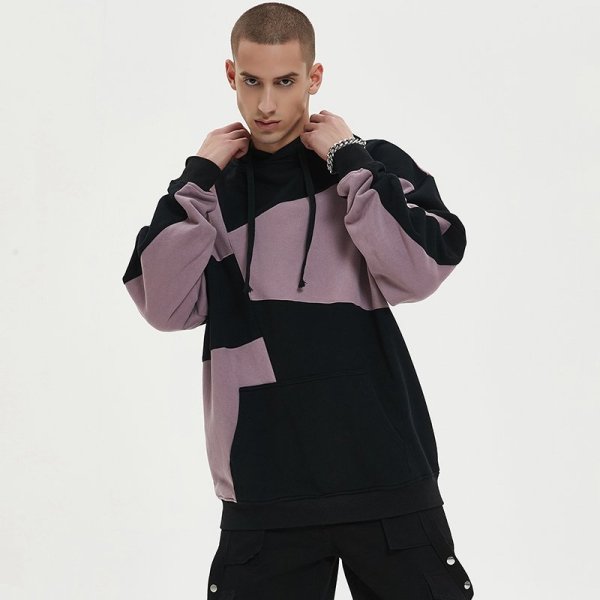
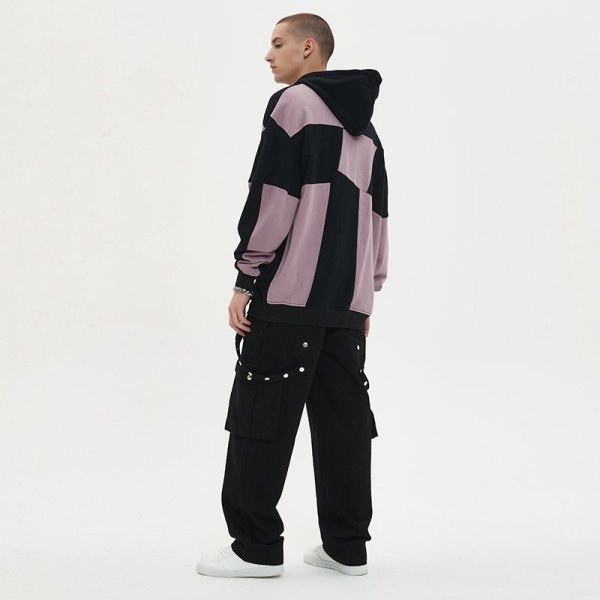
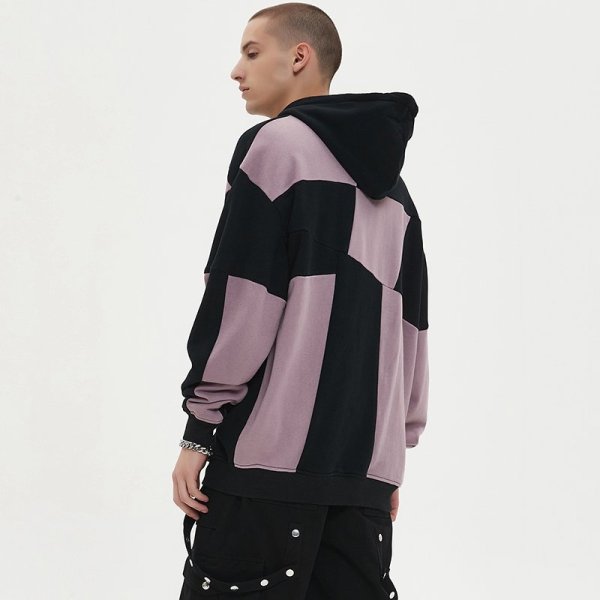
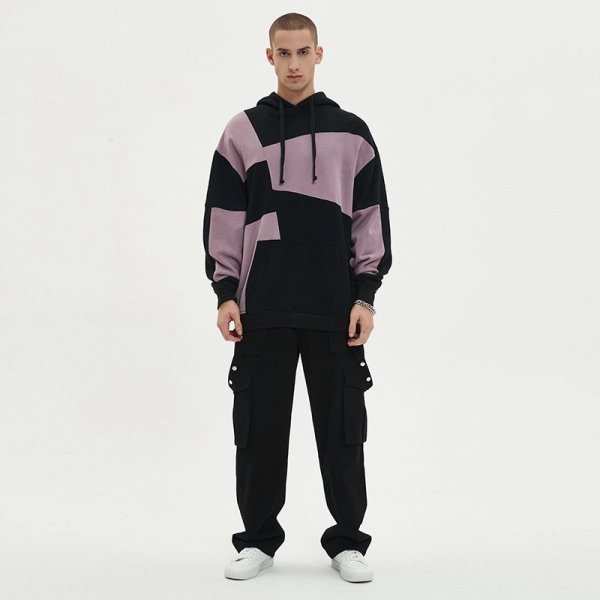
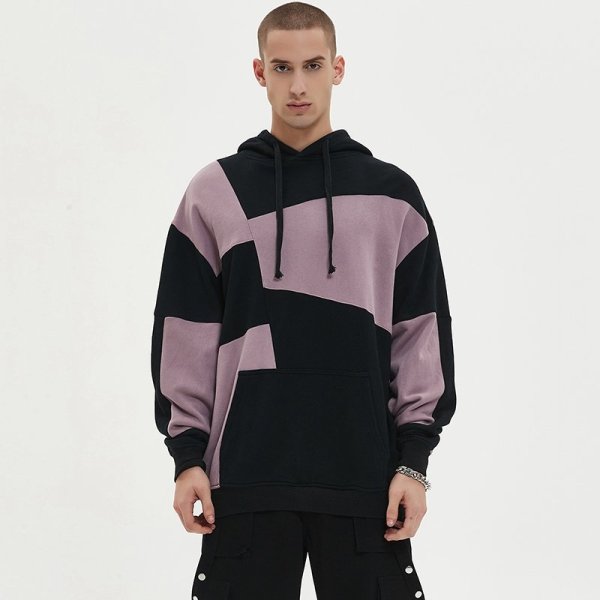
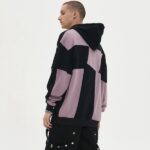
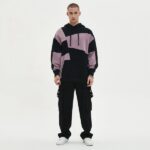
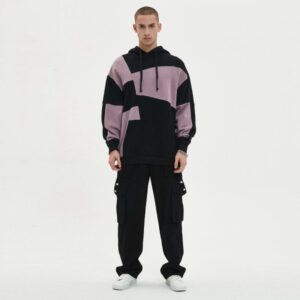
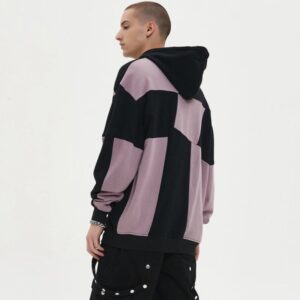
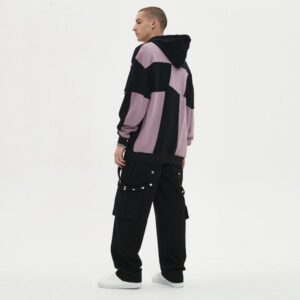
This irregular patchwork hoodie combines a black hood and ground with dusty pink panels across the chest, shoulders and sleeves. Offset shapes continue around the back, creating a graphic composition through fabric placement rather than a central printed logo.
The reference has a loose pullover body, dropped shoulders, dark drawcords and black rib cuffs and hem. Develop the exact panel map and fit from your measurements. Images do not confirm cotton percentage, GSM or the internal seam finish.
Irregular patchwork hoodie design decisions
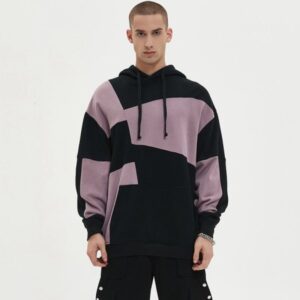
- Asymmetric front: map the stepped pink chest shapes against the black ground.
- Wraparound layout: define how shoulder, sleeve and back panels meet at each seam.
- Dark frame: a black hood and rib edges visually contain the contrasting blocks.
- Loose silhouette: specify body width, length and sleeve volume separately.
Irregular patchwork hoodie sample checkpoints
| Item | Approval requirement |
|---|---|
| Panel map | Front, back and sleeve pattern pieces with color codes, seam allowances and junction measurements. |
| Fabric compatibility | Compare composition, knit structure, weight, stretch and shrinkage of black and pink fabrics. |
| Seams | Check bulk, puckering, strength and skin contact where several panels join. |
| Hood and rib | Confirm hood depth, drawcord length, cuff recovery and hem opening. |
| Wash testing | Inspect dark-to-light color transfer, differential shrinkage, twisting and seam distortion. |
| Branding | Approve private labels, tested care information and packing instructions. |
Current color-block context
Vogue France’s 2026 runway coverage highlights contrasting color combinations. This reference interprets contrast with a restrained black and dusty pink palette; the production brief should prioritize coherent panel placement and compatible fabrics.
From irregular patchwork hoodie sample to production
- Send a numbered panel drawing, colors and a size chart.
- Review fabric swatches and a fit sample with completed panel seams.
- Approve wash results, color transfer checks and graded panel dimensions.
- Confirm quantity, inspection criteria, packaging and delivery terms before bulk production.
Custom hoodie manufacturing · Fabric sourcing · Sample development · Private labels
Design Reference Images
Irregular patchwork hoodie FAQ
Can we change the panel shapes and colors?
Yes. Supply front, back and sleeve drawings with a number for each pattern piece. Confirm color references and junction locations so the sample follows your own design rather than an approximate color arrangement.
How do we prevent black fabric bleeding onto pink panels?
Review fabric colorfastness before cutting and test the assembled garment using its proposed care method. Approve a dark-to-light transfer criterion and inspect both surface color and trapped seam allowances after washing.
Can adjoining panels shrink differently?
They can if their structures or finishes differ. Compare fabric shrinkage and stretch, then measure the complete sample after washing. Approve tolerances for panel alignment, body dimensions and twisting.
Will extra panel seams feel bulky?
Check seam allowances, stitch construction and multi-panel junctions on the sample. Wear and bend the arms to review inside contact. Adjust junction placement or seam treatment if the fit sample feels restrictive.
Can the loose shape be shorter without narrowing the body?
Yes, specify body length independently of chest width and sleeve length. Reposition the panel shapes for the shorter body and review the smallest and largest sizes before approving grading.
What affects MOQ, pricing and production time?
Each fabric color, sourcing minimum, pattern complexity and size breakdown affects feasibility and cost. Send your brief to confirm sample scope, MOQ, quotation and schedule after material approval.
Request an irregular patchwork hoodie RFQ
- Numbered front, back, sleeve and hood panel drawings.
- Color standards, fabric composition, knit structure and target GSM.
- Size chart, fit reference and quantities by color and size.
- Seam requirements, shrinkage tolerances and colorfastness criteria.
- Private labels, packing, delivery destination and requested date.