
Camouflage patchwork pants manufacturing reference
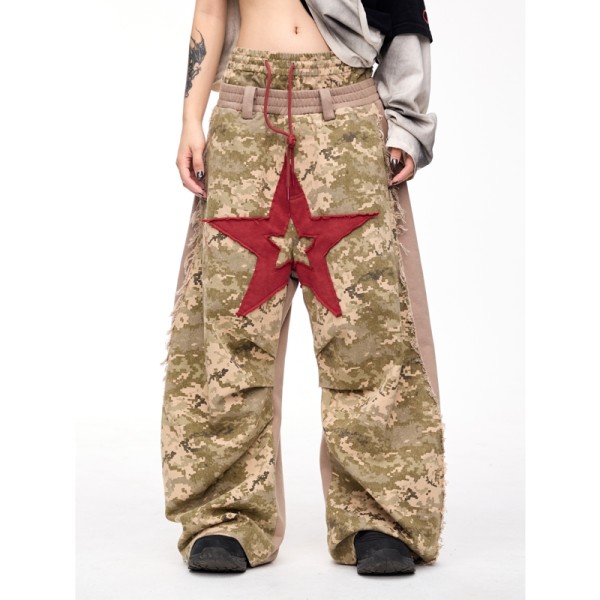
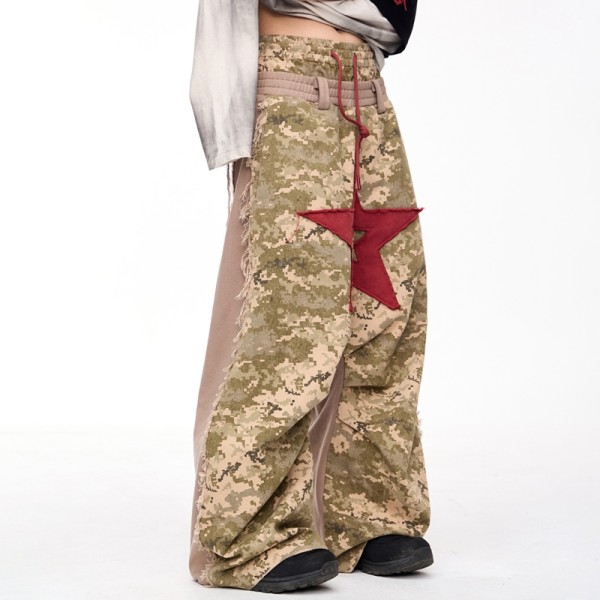
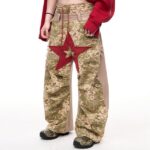
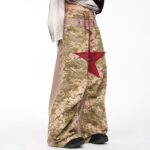
This camouflage patchwork pants reference shows camouflage fabric, contrasting star-shaped patchwork and exposed frayed-edge details. Use the images to discuss panel layout, silhouette, seam construction and surface appearance for your custom apparel project.
Confirm fabric composition, weight, finishing and trim details in your own specification. The reference does not establish organic status, a fixed GSM or a quilted construction.
Camouflage patchwork pants design features
- Muted camouflage ground: beige and olive-toned pattern forms the main body.
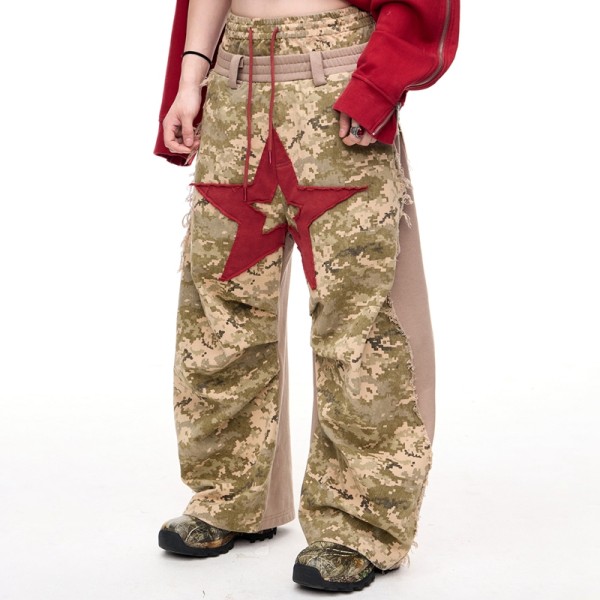
- Large contrasting star: a red star-shaped patch spans the front with a smaller central detail.
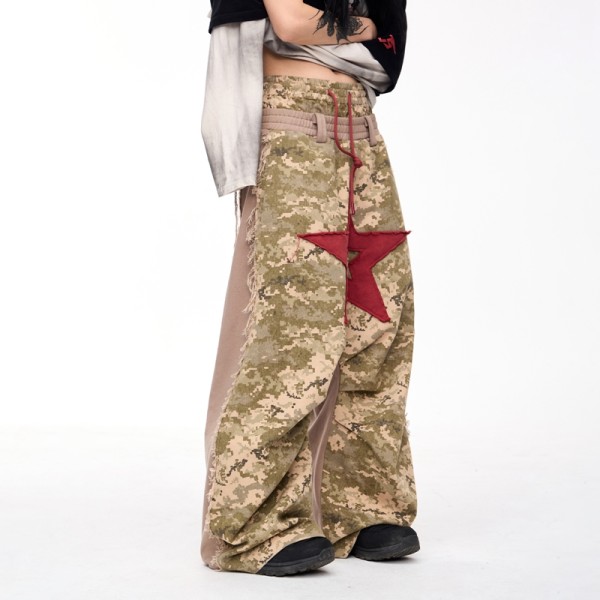
- Side panel contrast: muted solid sections frame the broad leg.
- Exposed edge detail: review frayed areas and joining seams for strength and wash behavior.
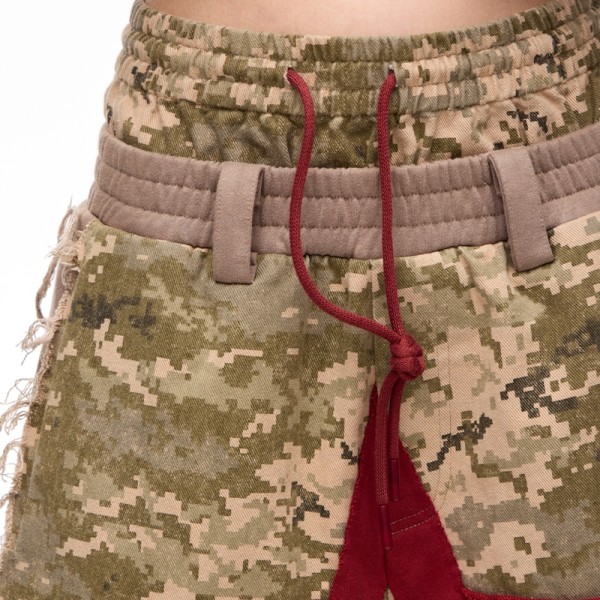
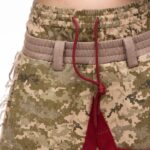
- Waist detail: the close-up shows a contrasting gathered band, belt loops and red cords.
Current camouflage design context
British Vogue’s September 2026 street-style coverage observes camouflage trousers outside fashion-week shows. Our development interpretation is to combine a muted camouflage base with one clear contrasting patchwork feature, while controlling edge durability and fit. This is a design route to assess, not proof of demand for this exact reference.
Camouflage patchwork pants sample checkpoints
| Development item | What to confirm |
|---|---|
| Fabric and camouflage | Select fiber content, woven structure, weight, camouflage repeat and color standard. Check hand feel, shrinkage and compatibility between base and patch fabrics. |
| Wide-leg fit | Specify waist, hip, rise, inseam, thigh and leg opening; define grading rules and tolerances. Approve standing and seated fit on a sample. |
| Star patchwork | Provide pattern pieces and placement measurements. Confirm patch size, seam allowance, stitch construction and matching across sizes. |
| Frayed edges | Define fringe length, exposed edge locations and acceptable variation. Inspect loose threads, seam strength and wash durability. |
| Wash appearance | Approve a physical shade and finish standard. Check color migration between contrasting fabrics, dimensional change and edge appearance after washing. |
| Waist and closures | Confirm waistband construction, drawcord or closure choice, pocket details and any hardware in the tech pack. |
| Labels and packaging | Confirm label placement, buyer-approved care information, size identifiers, hangtags and packing instructions. |
From reference to approved pants sample
- Send a tech pack, camouflage and patch references, measurement chart and quantities by style and color.
- Review pattern, fabric and patchwork feasibility, sampling scope and quotation inclusions.
- Approve fit, panel placement, fraying and wash results on a physical sample.
- Confirm the production specification, quality criteria, packaging, schedule and shipment terms.
Explore OEM/ODM cut and sew manufacturing, pattern and product development, fabric development, wash and craftsmanship capabilities, trims and accessories, private labels and packaging, sample development, factory overview and MOQ and pricing inputs.
Design Reference Images
Use these images to discuss panel placement, silhouette and edge detailing. The approved specification and sample define your final product.
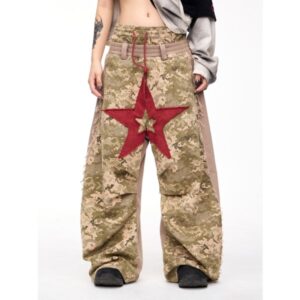
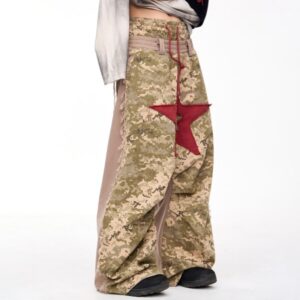
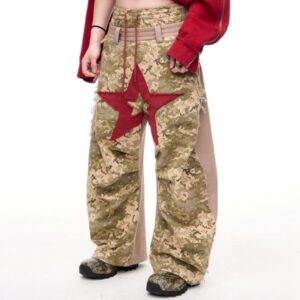
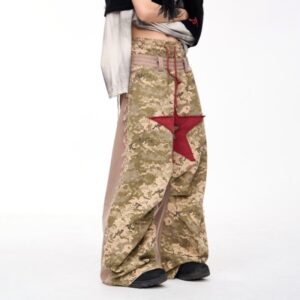
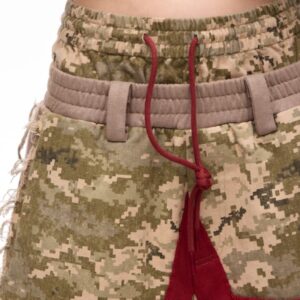
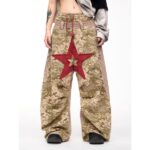
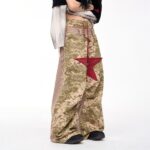
Front and angled views show the star scale, side-panel arrangement and broad leg. The waist close-up supports construction discussions. Confirm the back layout, fabric structure and finishing route separately in the sample brief.
Camouflage patchwork pants FAQ
Can camouflage patchwork pants use a different star or motif?
Provide original design files, camouflage and contrast-color references, and placement measurements. Define whether the patch crosses the front center seam or sits on one panel. Review pattern pieces, seam allowances and assembly on a physical sample before approval.
How do I control fraying and wash variation?
Set exposed edge locations, fringe length, loose-thread limits and acceptable shade variation. Approve a physical standard and inspect the garment after agreed wash checks. Define reinforcement where needed so the intended worn appearance does not weaken key joining seams.
Will the red patch transfer color onto the camouflage?
Review color compatibility on the actual base and patch fabrics. Check the combined garment under agreed care conditions for shade migration, contrast change and dimensional distortion. Finalize the material and care route from sample results rather than assuming separate swatches behave the same when assembled.
How should the wide-leg fit be specified?
Send waist, hip, rise, thigh, knee, inseam and hem-opening measurements with grading. Check movement and seated fit as well as standing appearance. Review star scale and side-panel placement across sizes so the patchwork remains balanced.
What waist and pocket details should the brief include?
Specify band material and construction, belt loops, cord length and function, closure choice and pocket layout. The reference close-up shows visible waist details but does not verify every internal construction. Approve comfort and seam stability on the complete sample.
What affects the MOQ, unit cost and timing?
Fabric sourcing, camouflage colorways, patch complexity, cutting and sewing labor, finishing, size breakdown and packing affect the quotation. Confirm your quantity breakdown, cost inclusions, sample scope and schedule before placing an order. Approve the physical garment and finish standard before bulk production.
Request a camouflage patchwork pants quote
Include these details in the form below:
- Original patch pattern and front/back placement map.
- Camouflage repeat and physical contrast-color references.
- Fabric targets, edge construction and wash-check requirements.
- Size chart, waist and pocket details, quantities by color and size.
- Labels, packing, destination and target delivery date.